
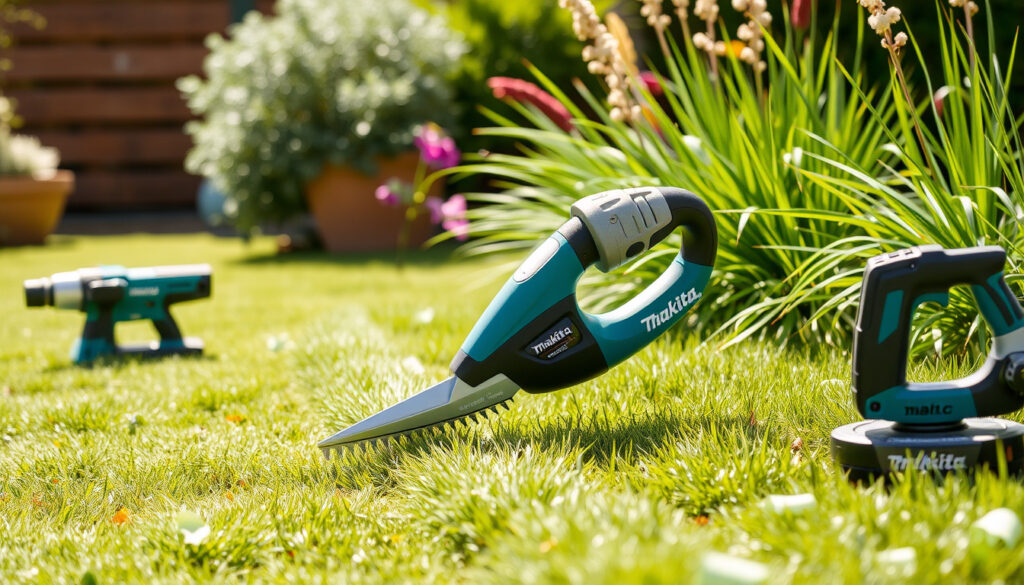
If you’ve got a backyard that’ll outgrow your weekend mowing schedule, a whipper snipper suddenly moves from “nice to have” to essential kit. Australian gardeners have been turning to Makita’s cordless line trimmers for that reason — no fuel mixing, no extension cords, and enough power to handle overgrown edges around fences and pathways. This guide walks through what the brand actually offers, which models rank on consumer reviews, and what to watch out for before you buy.
Voltage Options: 18V, 36V, 40V ·
Motor Type: Brushless ·
Popular Models: DUR190UZX9, DUR192LZ, DUR369AP ·
Retailers: Mitre 10, Bunnings, Total Tools ·
Recall Model: EM2600U 25.6cc 2-Stroke
Quick snapshot
- Makita produces brushless 18V/36V/40V whipper snippers listed on its official Australian site (Makita Australia)
- DUR181Z holds a 4.6/5 rating from 678 customer reviews at $199 RRP (Daily Review)
- 18V models deliver 40–45 minutes runtime per charge on typical use (Aussie Green Thumb)
- Exact battery life varies by model, head type, and vegetation density — real-world figures can diverge from specs (Aussie Green Thumb)
- Specific model launch or release dates aren’t publicly listed by Makita (Makita Australia)
- Long-term durability data beyond 2–3 years of user reports remains limited (CHOICE testing)
- 18V LXT string trimmer reviewed on YouTube since at least 2020 (YouTube review)
- Consumer rankings on ProductReview.com.au updated for 2025–2026 season (ProductReview.com.au)
- CHOICE independently tested DUR181SF model against competitors (CHOICE review)
- Makita continues expanding its XGT 40V range for trade-level users (Total Tools)
- Retailers like Bunnings and Total Tools carry the widest in-store selection (ProductReview.com.au)
- CHOICE testing may expand to additional 2026 model releases (CHOICE review)
The Makita lineup spans multiple voltage classes, with each tier targeting a different user segment from weekend homeowners to full-time landscapers. Here’s how the key specs and retail options shake out across the range.
| Feature | Detail |
|---|---|
| Brand Origin | Makita Australia official |
| Power Source | Cordless 18V/40V lithium-ion |
| Best For | Residential and professional landscaping |
| User Rating Source | ProductReview.com.au top 12 |
| Noise Level (DUR192) | 89dB |
| Cutting Line | 1.6mm nylon |
Does Makita make a whipper snipper?
Makita’s Australian website lists an extensive lineup of brushcutters and line trimmers under its 18V LXT and 40V XGT platforms. These are essentially the same tool — “whipper snipper” is the term most Australians use, while “line trimmer” appears in Makita’s own product catalog and on retailer pages. The naming difference is regional, not functional.
Available models like DUR190 and DUR192LZ
Three models keep surfacing in reviews and retailer listings. The DUR181Z is consistently rated as the top trade choice, praised for its durability, bump-feed head, and LXT battery compatibility (Daily Review). The DUR192 steps up to brushless motor tech with a 460W max power output, two-speed control (0–4600 RPM on Low, 0–6000 RPM on High), and a narrow guard for better visibility near fences and garden beds (Mitre 10). The DUR369AP sits in the 36V range for users who need more torque without committing to the 40V XGT platform.
Weight-wise, the DUR192 skin weighs 2.6kg — bumping to around 3kg once you slot in a battery. That’s noticeable compared to 12V options, but the tradeoff is meaningful runtime: expect 40–45 minutes per charge on a typical Australian suburban lawn with mixed-edge vegetation (Aussie Green Thumb).
Where to buy from Mitre 10 and Bunnings
Major hardware retailers stock Makita whipper snippers both in-store and online. Mitre 10 and Bunnings carry the DUR192 and DUR181Z skins, while Total Tools leans toward trade-focused inventory including the 40V XGT models (Total Tools). All three retailers offer click-and-collect, which matters if you want to verify the weight and balance before committing — a point repeatedly raised in user forums about buying power tools sight unseen. If you’re already invested in Makita’s 18V ecosystem, you might also consider pairing your trimmer with other tools from the range, such as a Makita hedge trimmer for comprehensive garden maintenance.
What is the difference between a strimmer and a whipper snipper?
Nothing, functionally. The distinction is purely regional vocabulary. In the UK and Ireland, the tool goes by “strimmer.” In Australia and New Zealand, “whipper snipper” is the standard term. North Americans typically say “weed eater” or “string trimmer.” All describe a handheld tool that spins a length of nylon line to cut grass and weeds at lawn edges.
Line trimmer vs whipper snipper terminology
Makita’s official Australian site uses “line trimmer” and “brushcutter” — the latter referring to heavier models with metal blades for scrub and thick weeds. The consumer-facing term on packaging and in hardware stores tends to be “whipper snipper,” particularly at Bunnings. If you’re searching online, searching both terms catches the full range of results from manufacturer listings and retailer pages.
Are they the same thing?
Yes, for nylon-line models. The mechanism — a spinning monofilament line that cuts on impact — works identically regardless of the name. The difference only matters when comparing to “brushcutters,” which can accept metal or plastic blades for heavier vegetation. Makita’s line trimmers like the DUR192 use nylon heads exclusively, with a 300mm cutting width and a spindle thread of M10 × 1.25LH (Mitre 10).
Are Makita string trimmers any good?
Based on aggregated consumer reviews and hands-on testing, yes — particularly for Australian buyers who want a cordless tool that doesn’t require fuel mixing or pull-cord starting. The brushless motor technology Makita uses across its 18V and 40V platforms delivers both runtime efficiency and torque that handles overgrown edges without stalling.
Customer reviews from ProductReview.com.au
ProductReview.com.au aggregates verified buyer ratings across Makita models, with rankings updated for the 2025–2026 season (ProductReview.com.au). The DUR181Z consistently scores toward the top of the Makita range, earning praise for its balance and comfortable grips alongside the fast-charging LXT battery ecosystem. CHOICE has also independently reviewed the DUR181SF against competitor models, providing an authoritative benchmark beyond self-selected review sites (CHOICE).
Pros and cons from users
Common positives across reviews: brushless motors run cooler and last longer, the LXT battery platform means one battery works across Makita’s entire 18V tool range, and the bump-feed heads are reliable for line advancement. Recurring negatives: the heavier weight of 18V models compared to 12V alternatives makes extended use more tiring, and the narrow guard on models like the DUR192 offers less debris protection for the user in heavy growth.
For homeowners with a mix of lawn and garden bed edges, the 18V Makita lineup hits the sweet spot between power and practicality. For tradespeople tackling daily edging across multiple properties, the 36V or 40V models justify the extra weight.
What are common Makita trimmer problems?
Three issues come up repeatedly in user forums and troubleshooting threads: line jamming in the bump-feed head, battery drain under continuous heavy use, and difficulty starting the tool after extended storage. Each has a straightforward fix that doesn’t require a service centre.
Why does the trimmer stop working?
The most common cause is a depleted battery, but not always obvious — Makita’s batteries display charge via a button on the pack itself, and if you’ve been running the trimmer on High speed, runtime drops faster than the indicator suggests. Another frequent culprit is the bump-feed mechanism seizing due to dried grass clippings packed around the spool. Soaking the head in water for 10–15 minutes usually frees it.
Line replacement and starting issues
Replacing the 1.6mm nylon line on Makita’s bump-feed heads follows the same process across models. The spool winds in a specific direction — winding the line backwards causes it to unravel immediately under load. Most users report spending more time fighting tangles than actually cutting. The starting procedure on 18V models is straightforward (engage lock, squeeze trigger, pull starter button), but if the trimmer sits unused for months, the capacitor in the brushless circuit can lose charge, requiring a few trigger pulses to reset.
Makita’s 18V models are built around the LXT ecosystem — batteries and chargers aren’t interchangeable with older 12V Makita tools or third-party alternatives. Buying into the platform means committing to the ecosystem for chargers and spares.
How long does a Makita whipper snipper last?
With proper maintenance — keeping the head clean, using the correct 1.6mm line, and storing batteries at around 50% charge — Makita brushless whipper snippers routinely exceed five years of domestic use. Trade users report 2–3 years of heavy weekly use before seeing meaningful performance decline in the motor.
Durability from 2025 hands-on reviews
Aussie Green Thumb’s 2025 testing noted that Makita’s brushless motors run cooler under sustained load compared to earlier brushed motor designs, directly translating to longer tool life (Aussie Green Thumb). The DUR192 additionally features Extreme Protection Technology — a sealed housing designed to resist dust and moisture infiltration, which matters for Australian conditions where lawn irrigation and sandy soil are constant.
Recall info on EM2600U
One Makita model carries a recall: the EM2600U 25.6cc 2-stroke unit. This is a petrol brushcutter, not a cordless whipper snipper, but it surfaces in searches for Makita trimmers generally. The recall relates to fuel tank integrity issues. Cordless 18V models are not affected.
Comparison: Makita 18V vs 12V Whipper Snippers
Five models cover the main Makita lineup in Australia’s cordless range — the DUR181Z and DUR192 lead the 18V category, while the 40V XGT models push into trade territory. The comparison below summarizes how the available models stack up against each other.
| Model | Voltage | Power | Weight | Cutting Width | Key Feature |
|---|---|---|---|---|---|
| DUR181Z | 18V LXT | — | — | — | Best trade choice per reviews |
| DUR192 | 18V LXT | 460W max | 2.6kg (skin) | 300mm | 2-speed brushless control |
| DUR190 | 18V LXT | — | — | 300mm | Dual nylon line outlets |
| DUR369AP | 36V | — | — | — | U-handle professional model |
| XGT 40V models | 40V XGT | — | — | — | Trade-level torque |
Detailed Specifications: Makita DUR192
The DUR192 sits in the middle of Makita’s 18V range as a brushless skin option — buyers supply their own battery and charger from the LXT ecosystem. This spec breakdown shows exactly what you’re getting with this model.
| Specification | Value |
|---|---|
| Motor | Brushless |
| Max Power Output | 460W |
| Speed — Low | 0–4600 RPM |
| Speed — High | 0–6000 RPM |
| Skin Weight | 2.6kg |
| Weight with Battery (est.) | ~3kg |
| Cutting Width | 300mm |
| Cutting Head | Nylon bump-feed only |
| Line Diameter | 1.6mm |
| Noise Level | 89dB |
| Spindle Thread | M10 × 1.25LH |
| Protection | Extreme Protection Technology (dust/moisture) |
Upsides
- Brushless motor runs cooler and lasts longer than brushed designs
- DUR181Z rated 4.6/5 from 678 verified buyer reviews at $199 RRP
- LXT battery platform shares across 18V Makita tool ecosystem
- 40–45 minutes runtime on 18V batteries handles most suburban properties
- Narrow guard on DUR192 improves trimming accuracy near edges
- Two-speed control lets users balance runtime vs cutting power
Downsides
- 2.6kg skin weight plus battery makes extended use tiring for some users
- Nylon head only — not compatible with metal or plastic blades
- Battery and charger sold separately on “skin” models
- 89dB noise level requires hearing protection in quiet neighbourhoods
- Line feed mechanism can jam with dry grass clippings
- Not compatible with 12V Makita batteries or third-party power sources
How to Replace Line on a Makita Whipper Snipper
Replacing the 1.6mm nylon line on Makita’s bump-feed heads takes about five minutes once you know the trick: winding direction matters. Here’s the step-by-step process.
- Switch off and disconnect the battery. This isn’t optional — the trigger can engage accidentally during head removal.
- Depress the retaining tabs on the bump-feed head and unscrew the cap by turning counterclockwise.
- Remove the old spool. Clean out any dried grass clippings — a dry head is the main cause of line jamming.
- Cut a length of 1.6mm nylon line — roughly 2–3 metres depending on spool size. Some pre-wound spools come ready to load.
- Insert one end of the line into the spool’s anchoring hole. Wind in the direction indicated by the arrow on the spool — winding backwards causes the line to fly off immediately when you hit the first edge.
- Leave 100–150mm of line free on each side before reassembling the cap. Screw the cap clockwise until it clicks into place.
- Reconnect the battery and tap the head on the ground to advance fresh line. If the line doesn’t release, the head may need soaking in water to free the feed mechanism.
Using the wrong line diameter — going thicker or thinner than 1.6mm — causes either poor cutting performance or line snapping under load. Generic line from hardware multipacks is often slightly oversized and fits poorly in Makita’s spool grooves.
How to Start a Makita Whipper Snipper
Makita’s 18V cordless models eliminate the pull-cord starting process entirely. The starting sequence is straightforward but differs slightly between models with two-speed controls.
- Install a fully charged LXT battery — the tool won’t operate below a certain voltage threshold. If the trimmer stutters immediately after starting, the battery is low.
- Engage the lockout switch (usually a sliding tab on the handle) to prevent accidental starts.
- Select your speed mode. On the DUR192, Low mode runs at 0–4600 RPM for lighter edging; High mode at 0–6000 RPM for overgrown vegetation. Save High for thick grass to extend battery life.
- Squeeze the trigger and hold it while you operate the trimmer. Release to stop.
- If the trimmer won’t start after storage (more than a few weeks idle), pulse the trigger three to four times to reactivate the brushless controller circuit.
“Makita DUR181Z 18V stands out as the best trade choice.”
“The 18V models are capable of tougher jobs but are heavier, and harder to control.”
Related reading: Makita Hedge Trimmer – Best 2025 Models Guide · Kmart Vacuum Cleaner: Anko Reviews & Buying Guide
In Australia’s outdoor power scene, Makita’s cordless whipper snippers compete directly with Stihl whipper snipper reviews that pros rely on for heavy-duty tasks.
Frequently Asked Questions
What models of Makita whipper snipper use 18V batteries?
The DUR181Z, DUR192, DUR190, and DUR369APT2 all run on 18V Makita LXT batteries. The DUR369AP is a 36V model requiring dual 18V batteries in series. The 40V XGT models use a separate 40V platform that is not cross-compatible with 18V LXT batteries.
Is there a recall on any Makita line trimmers?
The EM2600U 25.6cc 2-stroke brushcutter carries an active recall for fuel tank integrity issues. This is a petrol model, not a cordless unit. No Makita 18V, 36V, or 40V cordless whipper snippers are currently under recall.
How do I replace the line on a Makita whipper snipper?
Depress the bump-feed head retaining tabs, unscrew the cap counterclockwise, remove the old spool, clean the head, and wind 1.6mm nylon line onto the spool in the direction the arrow indicates. Reassemble, reconnect the battery, and tap the head on the ground to advance line.
What makes Makita whipper snippers durable?
Makita’s brushless motor design eliminates the carbon brushes that wear down in traditional motors, extending operational life. The DUR192 adds Extreme Protection Technology to seal internal components against dust and moisture. Combined with the LXT battery platform’s consistent voltage regulation, these designs handle sustained use without the performance drop seen in budget cordless trimmers.
Where can I buy Makita whipper snippers in Australia?
Bunnings and Mitre 10 carry the widest in-store selection of 18V Makita skins and combo kits. Total Tools focuses more on the trade segment with 36V and 40V XGT models. Amazon Australia stocks the DUR181Z with reliable delivery. All three hardware chains offer click-and-collect for online orders.
Are Makita whipper snippers better than petrol models?
For Australian suburban use, cordless Makita models outperform petrol equivalents in convenience — no fuel mixing, no pull-cord starting, no exhaust fumes near garden beds. Trade users working in remote areas without easy battery charging access still favour petrol for all-day runtime without interruption. The trade-off is weight: 18V Makita tools are heavier than equivalent petrol units but require less maintenance.
What is the best Makita whipper snipper for home use?
Based on consumer ratings, the DUR181Z at $199 RRP with its 4.6/5 score from 678 reviews represents the best value for typical home gardeners. The bump-feed head is reliable, the LXT battery ecosystem means you can share the battery with other Makita 18V tools you likely already own, and the weight is manageable for properties up to half an acre.
For Australian homeowners who already own Makita 18V tools, the decision to grab a Makita whipper snipper almost makes itself — the battery ecosystem is already in your shed. The real choice is which model: the DUR181Z for straightforward edging and general lawn maintenance, or the DUR192 if you want two-speed control and brushless efficiency for heavier overgrown patches. Skip the 40V XGT range unless you’re running a landscaping job — the weight penalty and charger cost don’t pay off for weekend mowing.

Andrew Patel leads fact-checking, source verification and corrections at Aussie Focus Hub.