Few home design decisions spark as much debate as what to place over your windows—between blinds, curtains, shades, and shutters, the choices can feel overwhelming. But behind the practical decisions, a quiet shift is happening, especially in high-end homes, toward leaving windows entirely bare.
Core functions: Light control, privacy, insulation ·
Common types: Blinds, shades, curtains, drapes, shutters ·
Retail examples: The Home Depot, Hunter Douglas, The Shade Store
Quick snapshot
- Window treatments include any material used to cover a window for light, privacy, or insulation (Planner 5D (design software platform))
- Common categories: blinds, shades, curtains, drapes, shutters (Hunter Douglas (window treatment manufacturer))
- Exact number of window treatment types varies by classification (Graber Blinds (window treatment brand))
- Slang usage of “window treatments” is not formally documented (Graber Blinds (window treatment brand))
- 2026 trends emphasize smart shades, sustainable materials, and bare-window looks (3 Blind Mice USA (window treatment retailer))
- Motorized treatments and natural materials gain traction (3 Blind Mice USA)
- Bare windows rise as deliberate aesthetic choice in luxury homes (Fixr (home improvement marketplace))
Here’s a quick reference of key facts.
| Attribute | Value |
|---|---|
| Primary functions | 3 (light, privacy, insulation) |
| Common categories | 5 (blinds, shades, curtains, drapes, shutters) |
| Major retailers | Home Depot, Hunter Douglas, The Shade Store |
| Most energy-efficient option | Cellular shades (honeycomb trap air) from Fixr (home improvement marketplace) |
| Best for precise light control | Blinds (adjustable slats) per Hunter Douglas |
| Best for high-end design | Curtains/drapery according to Fixr |
| Trending in 2026 | Smart shades, sustainable materials, layered treatments (3 Blind Mice USA) |
| Affordable materials | Aluminum/vinyl blinds per Graber Blinds |
What is considered a window treatment?
By definition, a window treatment is any material applied to a window to manage light, privacy, insulation, or style. According to Planner 5D (design software platform), the term covers everything from basic blinds to elaborate drapes. The category includes both functional coverings (blinds, shades) and decorative treatments (curtains, valances).
Three things every window treatment does:
- Block or filter sunlight
- Prevent outsiders from seeing in
- Add a layer of thermal insulation
Do curtains count as window treatments?
Yes. Curtains and drapes are among the oldest and most common window treatments. Graber Blinds (window treatment brand) describes them as soft fabric panels used primarily for visual warmth and decorative effect. They are distinct from blinds in that they don’t have adjustable slats, but they still serve the core purposes of privacy and light control, especially when made with blackout fabric.
The implication: any window covering qualifies, but the choice depends on your priorities.
What is the purpose of window treatments?
Window treatments exist for four main reasons: light management, privacy, thermal control, and aesthetics. According to Hunter Douglas (window treatment manufacturer), blinds allow you to direct light precisely by tilting slats, while curtains block light completely when closed. Shades like cellular shades trap air to reduce heat loss in winter and keep rooms cooler in summer, as noted by Fixr (home improvement marketplace).
Is it okay to have no window treatments?
Yes—and it’s increasingly intentional. In high-end residential architecture, bare windows are chosen for minimalist aesthetics and unobstructed views. Fixr notes that the “bare window” trend is growing among luxury homeowners who prioritize clean lines over privacy. The trade-off is reduced privacy and less control over sun glare and heat.
Why do rich people leave windows uncovered?
The preference among affluent homeowners for bare windows often stems from architectural pride—expansive glass walls and scenic views are meant to be seen, not covered. According to design analysis from 3 Blind Mice USA (window treatment retailer), the trend reflects a shift toward “less is more” where windows become part of the decor rather than a surface to hide.
The implication: foregoing window treatments is a deliberate design statement, not an oversight. It works best when privacy is already ensured by landscaping, elevation, or frosted glass.
Are window treatments the same as blinds?
No. Blinds are a specific type of window treatment with adjustable horizontal or vertical slats. Hunter Douglas states that blinds give the most precise light control because users can raise, lower, and tilt the slats. However, the category “window treatments” includes far more than blinds—curtains, shades, shutters, and window film are all treatments.
Which is better: blinds or curtains?
It depends on the room. For living rooms and kitchens, Fixr recommends blinds for their precise light and privacy control. For bedrooms and formal spaces, curtains (especially lined or blackout drapes) offer better light blocking and a softer aesthetic. Graber Blinds adds that curtains reduce drafts along the sides of windows, improving insulation.
Comparison table below shows the key differences.
Homeowners who choose blinds for adjustability may sacrifice the visual warmth and side-sealing benefits of curtains. Those who prefer curtains gain style and insulation but lose the ability to direct light precisely.
| Factor | Blinds | Curtains | Shades |
|---|---|---|---|
| Light control | Excellent (tilt & raise/lower) from Hunter Douglas | Good (full open/close; blackout options) per Graber Blinds | Moderate (up/down only; cellular shades filter light) per Fixr |
| Privacy | Good (slats can be closed tight) | Good (full coverage when closed) | Good (covers entire window) |
| Insulation | Low (slats allow drafts) | Moderate (side seals reduce drafts) | High (cellular trap air) per Fixr |
| Cost range | $30–$200+ per window (aluminum/vinyl cheapest, wood highest) per Graber Blinds | $40–$400+ per panel (fabric, lining factors) | $40–$250+ per window (cellular most expensive) |
| Maintenance | Easy (dust/wipes) | Moderate (washing/dry-cleaning) | Easy (dust/vacuum) |
| Best room type | Kitchen, living, dining (Fixr) | Formal living, master bedroom (Fixr) | Bedrooms, home offices (energy efficiency) |
The pattern: one size doesn’t fit all. Blinds suit busy rooms where light precision matters; curtains excel where comfort and style take priority; shades lead when energy efficiency is the goal.
What are examples of window treatments?
There are at least 12 distinct types of window coverings recognized by the industry. Graber Blinds and Hunter Douglas list these common categories:
- Roman shades – fabric that folds into neat horizontal stacks when raised
- Roller shades – single piece of fabric rolls up and down
- Cellular (honeycomb) shades – pleated fabric with air-trapping cells for insulation
- Vertical blinds – slats that slide along a track, popular for sliding doors
- Horizontal blinds – classic venetian style with adjustable slats
- Curtains – soft fabric panels hung on a rod
- Drapes – heavier, lined curtains for formal settings
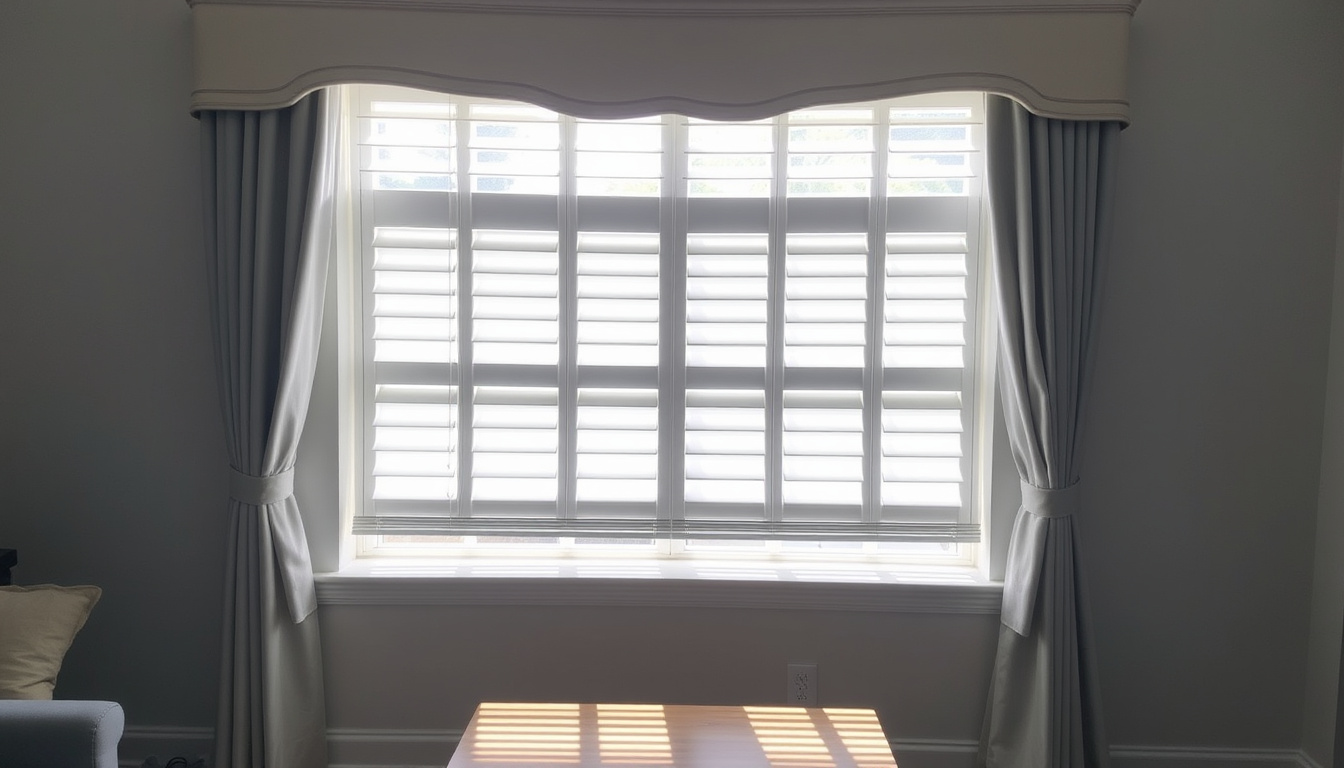
- Plantation shutters – hinged wood or composite panels with adjustable louvers
- Woven wood shades – natural bamboo, reeds, or grasses
- Solar shades – mesh fabric that filters UV light while preserving views
- Panel tracks – large fabric panels that slide on a track, ideal for wide windows
- Window film – adhesive or static-cling tinting for privacy and UV reduction
What are indoor window treatments?
Indoor window treatments refer to any covering installed inside the home to control light, privacy, or heat inside the room. All the types above are considered indoor treatments. The term distinguishes them from exterior options like awnings or outdoor blinds used on patios.
Choosing the right indoor treatment can reduce energy bills by up to 25% according to Fixr, making the decision both a design and a financial one.
The pattern: the variety of options allows for tailored solutions to any window need.
What is the new trend for window treatments?
Current trends favor motorization, natural materials, and—surprisingly—bare windows. According to 3 Blind Mice USA (window treatment retailer), the 2026 trend list includes smart window shades that can be programmed via smartphone, sustainably sourced fabrics, and layered treatments that combine blinds with curtains for both function and texture. Meanwhile, high-end architectural projects increasingly leave windows uncovered to celebrate views and minimalist lines, as reported by Fixr.
At the pricey end of the market, the ultimate window treatment is none at all. For everyone else, layering shades and curtains offers the best balance of control and comfort.
The catch: the bare window trend is viable only when privacy and climate allow.
Pros and cons of window treatments
Upsides
- Improve energy efficiency (cellular shades cut heat loss)
- Enhance privacy and security
- Customizable to any decor style
- Protect furniture from UV fading
- Increase home value when well chosen
Downsides
- Upfront cost can be high (motorized shades >$500 per window)
- Cleaning and maintenance (curtains need washing, blinds collect dust)
- Bulky layers can overwhelm small rooms
- Style choices may date quickly
Confirmed facts vs. what’s unclear
Confirmed facts
- Window treatments include blinds, shades, curtains, drapes, shutters. (Planner 5D)
- They control light, privacy, and insulation. (Hunter Douglas)
- Cellular shades are the most energy-efficient. (Fixr)
What’s unclear
- Exact number of window treatment types varies by classification.
- Slang meaning (“window treatments” as euphemism) lacks formal documentation.
- Cost comparisons across different treatment types are not standardized across retailers.
- Exact energy savings percentages vary by climate and installation.
- Popularity rankings of treatment types are often based on limited surveys.
What this means: the field is well-documented for core functions but less clear on peripheral details.
Quotes from industry sources
“Window coverings are the practical solution for privacy, light control, and insulation, while window treatments are the aesthetic finishing layer.”
“Blinds give the most control over light because you can raise them, lower them, and rotate the slats.”
Summary
Window treatments are no longer just about covering glass—they’re about curating light, privacy, and thermal comfort in a way that reflects personal style. The market now offers everything from budget-friendly vinyl blinds to premium smart shades and even the radical choice of bare windows. For the modern homeowner, the decision comes down to one question: are you using your windows as a canvas or as a view? The answer determines whether you invest in layered luxury or embrace the open pane. Either way, the right choice will save energy, protect interiors, and define the atmosphere of every room.
For a more detailed overview, you can explore the definition, types and examples of window treatments on Ireland Point.
Frequently asked questions
Can window treatments be customized?
Yes. Most major retailers like Hunter Douglas and The Shade Store offer custom sizing, fabric, color, and motorization options to fit any window dimension.
How do I measure for window treatments?
For inside‑mount, measure the exact width and height of the window recess. For outside‑mount, measure the desired coverage plus extra for overlap. Always double‑check before ordering.
Are window treatments expensive?
Costs vary widely. Basic vinyl blinds start around $30 per window, while custom motorized shades can exceed $500. The average homeowner spends $200–$600 per window depending on material and labor.
Do window treatments save energy?
Cellular shades can reduce heat loss by up to 40% in winter and cut solar heat gain in summer, according to Fixr. Curtains also provide a draft barrier when tightly fitted.
What is the most popular window treatment style?
Roller shades and horizontal blinds remain the most purchased styles due to their affordability and clean appearance. In higher‑end homes, plantation shutters and Roman shades are favored.
Can you mix different window treatments in one room?
Absolutely. Layering curtains over blinds or shades is a popular designer trick that combines light control with softness and depth. It works best when colors and textures complement each other.
How often should window treatments be cleaned?
Blinds should be dusted weekly, curtains every 3–6 months depending on fabric, and shades can be vacuumed with a brush attachment every few months. Deep cleaning annually extends their lifespan.
The bottom line: window treatments are a personal investment in comfort and style.
Related reading
- Ecosa Bed Frame Review – for more home design insights
- IKEA Bedside Table: Narrow, Black & Locker Options – complement your window treatment research

Ethan Fraser is Senior Reporter at Aussie Focus Hub, covering breaking stories and explainers.