
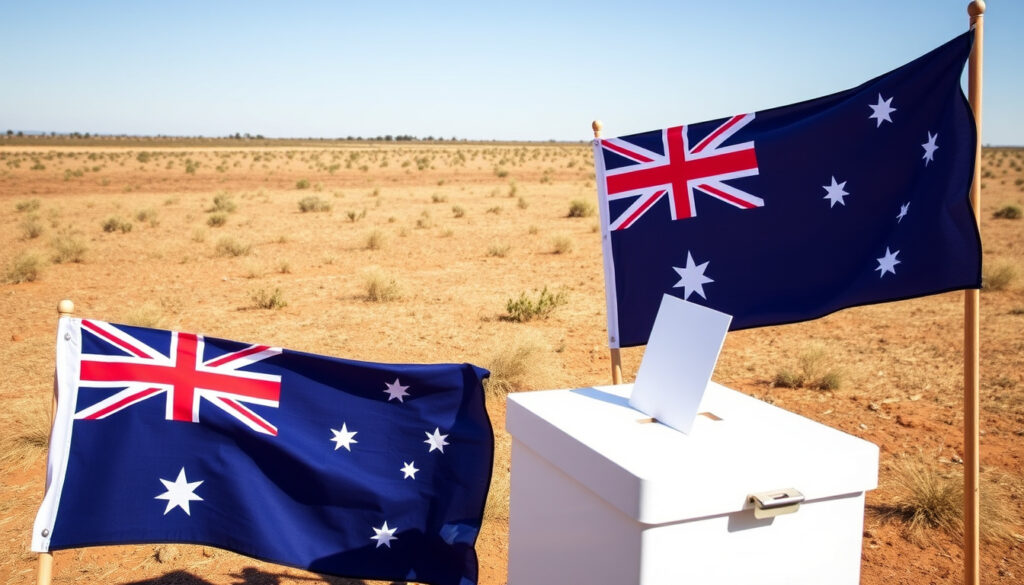
When a safe Liberal seat in rural New South Wales suddenly flipped to One Nation, it sent a shockwave through Australian politics. Here’s what happened, how the vote broke down, and why the shift matters beyond one electorate.
Date of by-election: May 9, 2026 ·
Winning party: One Nation ·
Winning candidate: David Farley ·
Seat name: Farrer (NSW) ·
Historic significance: First One Nation lower house seat in Australia ·
Previous seat holder: Sussan Ley (Liberal)
Quick snapshot
- One Nation candidate David Farley won the Farrer by-election on May 9, 2026, with 38,873 first-preference votes (39.5%) – Antony Green (ABC election analyst)
- The seat had been held by the Coalition since 1949 – Sunrise (Seven Network morning program)
- Liberal candidate Raissa Butkowski received only 12,199 votes (12.4%), a swing of –31.0% – Antony Green
- Whether One Nation can repeat this result in other rural seats at the next general election
- The exact breakdown of preferences and second-preference flows beyond the two-candidate preferred count
- How the major parties will adjust their rural policy platforms in response
- Whether the turnout of 84.88% is significantly lower than typical by-elections
- Why the Coalition lost the seat after 77 years
- Whether the two-candidate preferred count of 55.9% will stand as the final official tally
- Early 2026 – Sussan Ley resigns from Parliament (Wikipedia (online encyclopedia))
- David Farley will take his seat in the House of Representatives when Parliament resumes
- Major parties are expected to review their rural engagement strategies
- Political analysts will watch other Coalition-held rural seats for similar trends
Seven key facts about the Farrer by-election show the scale of the shift: One Nation didn’t just win — it demolished the traditional two-party vote.
| Election type | By-election (single seat) |
| Electorate | Farrer, New South Wales |
| Winner | David Farley (One Nation) |
| Winning party | One Nation |
| Previous party | Liberal Party of Australia |
| Date | May 9, 2026 |
| Significance | First lower house seat for One Nation |
Who won the election in Australia?
One Nation candidate David Farley won the Farrer by-election on May 9, 2026. According to the Australian Electoral Commission (AEC) Tally Room, Farley received 38,868 first-preference votes (39.46%) — a swing of +32.86%. Independent Michelle Milthorpe came second with 27,961 votes (28.39%), while the Liberal party’s Raissa Butkowski slumped to 12,193 votes (12.38%), a swing of –31.03%. The result gave One Nation its first ever seat in the House of Representatives.
What are the Farrer by-election results?
The by-election saw a turnout of 84.88% (105,634 total votes), with 103,063 formal votes (90.97%) per Wikipedia. On a two-candidate preferred basis, Farley won 55.9% to Milthorpe’s 44.1%, as calculated by Antony Green (ABC election analyst).
What is the One Nation party?
One Nation is a right-wing populist party founded by Pauline Hanson in 1997. Before Farrer, it had only ever held seats in the Senate. The party’s platform focuses on restricting immigration, opposing climate policies, and advocating for rural and regional interests. The win in Farrer is the party’s first breakthrough into the lower house.
What is a by-election in Australia?
A by-election is a special election held to fill a vacancy in a single seat of the House of Representatives between general elections. It is triggered when an MP resigns, dies, or is disqualified. By-elections are often seen as a bellwether of voter sentiment between federal elections.
How does a by-election differ from a general election?
In a general election, all 151 House of Representatives seats are contested simultaneously, usually every three years. A by-election focuses on just one division, has lower voter turnout, and can be called at any time by the Speaker. The Farrer by-election was triggered by the resignation of sitting Liberal MP Sussan Ley.
Why was a by-election held in Farrer?
Sussan Ley, who had held the seat since 2001 and served as deputy leader of the Liberal Party, resigned from Parliament in early 2026. The exact reason for her resignation has not been officially detailed, but it prompted the writ for a by-election in the division of Farrer.
By-elections give a rare glimpse of voter mood without the noise of a national campaign. The Farrer result shows regional Australia is willing to abandon a 77-year Coalition stronghold for a populist alternative.
The implication: By-elections like Farrer offer a rare, unfiltered view of voter sentiment away from national campaigns.
What are the Farrer by-election results?
The AEC official tally confirmed all 94 polling places counted. David Farley (One Nation) secured 38,868 votes (39.46%), independent Michelle Milthorpe 27,961 (28.39%), Liberal Raissa Butkowski 12,193 (12.38%), Nationals Brad Robertson 9,581 (9.7%), Legalise Cannabis 2,279 (2.3%), and others smaller shares. The informal vote was 6.7% according to Antony Green.
What was the voter turnout?
Turnout was 84.88%, slightly below the average for general elections but typical for a by-election. Out of 105,634 enrolled voters, 98,537 cast ballots.
Did One Nation win outright or with a majority?
One Nation did not win an absolute majority of first-preference votes (39.5%), but after preferences were distributed Farley reached 55.9% in the two-candidate preferred count, a clear victory. The Liberal-National coalition combined got only about 22% of the primary vote.
The pattern: The collapse of the Coalition vote in a safe seat signals a deeper realignment in regional politics.
Why is the Farrer seat important?
Farrer covers the southern Riverina region of New South Wales, stretching from the Murray River to the Murrumbidgee. It is a largely agricultural electorate – wheat, sheep, and wine production dominate. The seat had been held by the Coalition without interruption since its creation in 1949, including by former deputy prime minister Tim Fischer and later Sussan Ley.
What is the history of the Farrer electorate?
Named after explorer William Farrer, the division was one of the safest Liberal seats in the country. In the 2025 general election, Ley retained the seat with a 16% margin. The by-election swing of more than 30% against the Liberal party is unprecedented in recent history.
How does Farrer’s demographics influence its politics?
The electorate is predominantly rural, with an aging population and a strong reliance on farming. Issues like water rights, migration policy (especially temporary agricultural visas), and regional healthcare were central to the campaign. One Nation’s messaging on these issues resonated strongly.
Farrer is not an outlier – it fits a broader trend of rural seats shifting away from the Coalition. Similar swings occurred in by-elections in Victoria and Queensland in 2024-2025, though none flipped to One Nation before Farrer.
What this means: Farrer’s demographic shift toward populism could set a precedent for other rural electorates.
What does this election mean for Australian politics?
The Farrer by-election is being interpreted by analysts as a warning shot to the major parties. Speaking on Sunrise, political commentator Peter van Onselen described it as “a massive wake-up call for the Coalition”.
Has One Nation won federal seats before?
One Nation previously held only Senate seats – most notably Pauline Hanson herself from Queensland. The Farrer win gives the party its first House of Representatives presence, allowing it to introduce bills and participate more directly in government formation negotiations.
What are the reactions from major political parties?
The Liberal Party has not issued an official detailed response, but internal sources cited by Sunrise acknowledge that rural disenchantment over water policy and migration has been building for years. The Nationals lost their candidate’s deposit, winning less than 10% of the vote – a catastrophic outcome in a seat they had held as part of the Coalition.
The catch: Major parties now face the urgent task of rebuilding trust in the regions before the next general election.
Timeline
- – Farrer by-election; David Farley (One Nation) wins (AEC)
“Rural communities have been taken for granted by the major parties.”
— David Farley, One Nation candidate, as reported on Sunrise
“This is a massive wake-up call for the Coalition.”
— Peter van Onselen, political commentator, speaking on Sunrise
For the Liberal Party, the loss of Farrer is a clear warning that rural voters are willing to abandon a 77-year hold on a seat. The party must urgently address the grievances over farming and migration policies, or risk losing more heartland seats to populist challengers.
While the Farrer by-election marked a historic first for One Nation, it followed the broader Labor landslide in the 2025 federal election that reshaped the national political landscape.
Frequently asked questions
What date was the 2026 Farrer by-election held?
Who was the previous MP for Farrer?
What does ‘lower house seat’ mean in Australia?
How many votes did David Farley get?
What are the official results from the Australian Electoral Commission?
Why did Sussan Ley resign?
Related stories




Liam O'Brien covers Australian politics and public affairs for Aussie Focus Hub.