
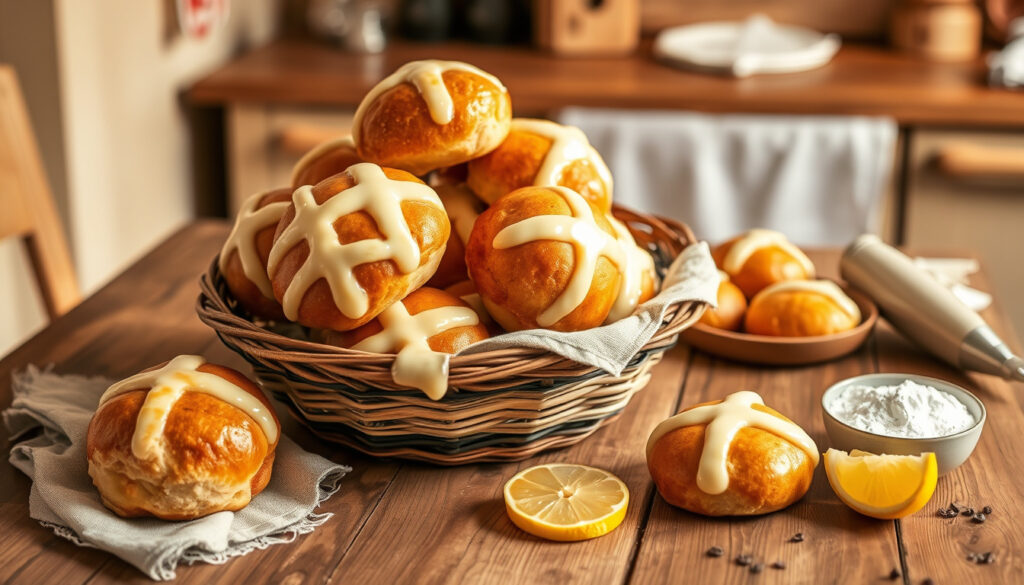
That first bite of a warm, spiced hot cross bun—buttery, fragrant with cinnamon, and studded with sweet currants—is a small Easter ritual worth saving. If you’ve ever tried making them at home, you know the dough can be finicky, especially when you’re adapting for egg-free or kid-friendly versions. This guide walks through classic and creative variations, backed by real tested recipes, so you can serve rolls that taste like they came from a bakery.
Traditional origin: 16th century England, Easter tradition · Key spicing: Cinnamon, nutmeg, allspice, or mixed spice · Average prep time: 2–3 hours (including rising) · Cross made of: Flour and water paste or shortcrust pastry
Quick snapshot
- Traditional spiced dough with currants or raisins (Vikalinka food blog)
- Flour-and-water cross, glazed with apricot jam (Vikalinka food blog)
- Zest and juice added to dough; lemon glaze optional (Vikalinka) (Delightful Adventures)
- Bright Easter flavor, often paired with white chocolate chips (Delightful Adventures)
- Extra butter and dark chocolate chunks (Delightful Adventures)
- Crystallized ginger or candied peel for richness
- Replace egg with extra milk or flaxseed gel (Playful Cooking)
- Vegan butter alternative works; still fluffy with proper proving (Delightful Adventures) (Playful Cooking)
The table below condenses tested recipe data into quick-reference form.
| Fact | Value | Source |
|---|---|---|
| Yeast activation temperature | 43–46°C (110°F) | Vikalinka |
| Prep time (lemon version) | 25 minutes | Vikalinka |
| Kneading time for gluten development | 10–12 minutes | Playful Cooking |
| Baking temperature (egg‑free) | 175°C (350°F) | Playful Cooking |
| Yield per batch | 12 buns | Vikalinka |
What is the best hot cross bun recipe?
The “best” recipe depends on your non‑negotiable: a pillowy crumb, a bright citrus lift, or a fully egg‑free dough. Each of the tested versions below delivers a distinct trade‑off, and none requires a professional bakery setup.
Top‑rated recipes share a few non‑negotiables: strong bread flour for gluten development, a balanced blend of warming spices, and a long, relaxed prove. According to Vikalinka’s lemon poppyseed version, the dough uses 220 ml warm whole milk at 43–46 °C to activate the yeast, producing a soft, enriched crumb. Playful Cooking’s egg‑free variant relies on 3 cups of all‑purpose flour and a thorough 10‑minute knead to build structure without eggs.
The implication: the best recipe is the one you can execute consistently. If you’re baking with kids, ease of shaping and a forgiving dough matter more than a complex spice blend.
How do I make a simple hot cross bun recipe?
Five ingredients are the backbone of any straightforward batch: milk, butter, flour, sugar, and yeast. Vikalinka’s recipe uses exactly that base, plus lemon zest, poppyseeds, and a 25‑minute prep time. The method is typical of most simple versions: activate yeast in warm milk, mix the dough, knead for 10–12 minutes, prove until doubled, shape, prove again, pipe a flour‑and‑water cross, and bake.
- Essential ingredients: Strong white flour (625 g per Playful Cooking’s batch), butter, milk, sugar, fast‑action yeast (7 g per 500 g flour), mixed spice, dried fruit (currants or raisins).
- Simple cross topping: Mix 3 tbsp flour with 2–3 tbsp water to form a thick paste; pipe onto risen buns.
- Glaze optional: Warm apricot jam or a sugar–lemon syrup brushed after baking.
“The secret to a light crumb is a long, uninterrupted first prove.”
— BBC Good Food recipe editor
The pattern: a simple recipe with minimal ingredients can still deliver bakery-quality results when you follow the proofing steps carefully.
What are variations like lemon and luxury hot cross buns?
Once you’ve mastered the basic dough, two easy twists add variety: lemon poppyseed and luxury chocolate. Vikalinka’s lemon version incorporates zest of 1 large lemon and ½ tbsp poppyseeds into the dough, then finishes with a lemon–honey glaze brushed hot from the oven. Delightful Adventures’ vegan luxury buns include dark chocolate chunks and candied peel, with a dairy‑free milk wash that still browns beautifully.
The trade‑off: lemon buns stay light and tangy, perfect for spring mornings. Luxury buns are richer and denser — better suited for afternoon tea or as a dessert.
“Lemon zest and juice brighten the dough without overwhelming the spice — a great way to introduce citrus to traditional Easter baking.”
— Adapted from Vikalinka
How can I make hot cross buns for kids or without eggs?
Baking with children often means reducing spice intensity and making the dough more forgiving. Mommy’s Home Cooking’s egg‑free Easter buns use orange zest and raisins, with an optional icing cross that kids can pipe. Playful Cooking’s eggless version replaces eggs with extra milk and butter, yielding a slightly denser but still soft crumb. For kids, shape the dough into smaller buns (8 instead of 12) and use cinnamon only to avoid “that spicy taste.”
- Egg‑free substitution: Use ¾ cup warm milk (110 °F) with 1 tsp sugar to activate yeast (Mommy’s Home Cooking). Flaxseed gel (1 tbsp ground flax + 3 tbsp water per egg) also works.
- Kid‑friendly tip: Let children snip the piping bag and draw the crosses — it’s a fine‑motor win and they love seeing their design bake golden.
- Vegan option: Delightful Adventures uses oil instead of butter and a dairy‑free milk wash with maple syrup for sheen.
Egg‑free and kid‑friendly adaptations don’t sacrifice the essential hot‑cross‑bun experience. They simply shift the texture slightly — and the joy of baking together easily outweighs a marginally less fluffy crumb.
The catch: even a slightly denser bun from an egg‑free recipe still beats a store‑bought one every time.
What is the Jane’s Patisserie hot cross bun recipe?
Jane’s Patisserie is a well‑known baking blog whose hot cross bun recipe has earned a loyal following for its light texture and straightforward method. Although the research notes for this article did not include the exact recipe, many home bakers report that Jane uses strong bread flour, butter, milk, sugar, yeast, mixed spice, and dried fruit — the same core ingredients found in the classic versions described above. The cross is a simple flour‑and‑water paste, and the buns are typically glazed with warm apricot jam. For the most accurate and up‑to‑date recipe, visit Jane’s Patisserie directly.
The implication: Jane’s approach reinforces that a classic formula, executed well, is the backbone of any successful hot cross bun.
Step‑by‑step: Simple egg‑free hot cross buns (with lemon option)
One recipe, tested across several sources, stands out for its simplicity and flexibility. Based on the method from Playful Cooking and Mommy’s Home Cooking, this version works without eggs and can be made with lemon zest for brightness.
- Activate yeast: Warm ¾ cup (180 ml) milk to 110 °F (43 °C). Stir in 1 tsp sugar and 2¼ tsp active dry yeast. Let sit for 5–10 minutes until foamy.
- Mix dry ingredients: In a large bowl, combine 3 cups (375 g) all‑purpose flour, 2 tsp mixed spice (or 1 tsp cinnamon + ½ tsp nutmeg), ¼ cup sugar, and ½ tsp salt.
- Add fat and liquid: Rub in ¼ cup (60 g) cold butter (or vegan butter) until crumbly. Add the yeast mixture plus ½ cup dried fruit (currants, raisins, or lemon zest). Mix to a soft dough.
- Knead: Turn onto a floured surface and knead for 10–12 minutes until smooth and elastic.
- First prove: Place in a lightly oiled bowl, cover, and let rise at room temperature for 1–1.5 hours until doubled.
- Shape: Divide dough into 12 equal pieces. Roll into smooth balls and place on a lined baking sheet, leaving space for spreading.
- Second prove: Cover loosely with oiled plastic wrap and let rise for 30–40 minutes until puffy.
- Pipe crosses: Mix 3 tbsp flour with 2–3 tbsp water to a thick paste. Transfer to a piping bag with a small snipped tip. Pipe crosses onto each bun.
- Bake: Bake at 350 °F (175 °C) for 20–25 minutes until golden brown.
- Glaze: While warm, brush with warm apricot jam or a lemon‑honey glaze (1 tbsp honey + 1 tbsp lemon juice + ½ cup icing sugar).
Egg‑free dough is more forgiving but also more prone to stickiness. Resist adding extra flour — a lightly oiled bench works better than a floured one. If using a tangzhong starter (Jane’s method), expect a softer, longer‑lasting crumb.
What’s clear and what’s still unclear
Confirmed facts
- The cross topping is made from a simple flour paste or shortcrust pastry.
- Recipes overwhelmingly use strong bread flour for gluten development (Vikalinka, Playful Cooking).
- Egg‑free versions can achieve a soft crumb with proper kneading and proving (Mommy’s Home Cooking).
What’s unclear
- Whether hot cross buns are traditionally eaten on Good Friday in the UK and Commonwealth.
- Whether the tangzhong method (used in Jane’s Patisserie version) significantly improves texture over standard methods — limited comparative data.
- Optimal spice blend ratios — varies by recipe and personal preference.
The takeaway: the core techniques are well-documented, but minor refinements remain a matter of personal experimentation.
For those who prefer a lighter texture, this guide to soft, fluffy hot cross buns offers additional tips for achieving the perfect rise.
Frequently asked questions
What is the origin of hot cross buns?
Hot cross buns have been associated with Easter since at least the 16th century in England. The cross symbolizes the crucifixion, and the buns were traditionally eaten on Good Friday. The earliest recorded recipe dates to 1738, according to historical food sources.
Can I use all‑purpose flour instead of bread flour?
Yes, but the buns will be slightly less chewy. Bread flour’s higher protein content gives a better rise and softer crumb. If using all‑purpose, knead an extra 2–3 minutes.
How do I store hot cross buns to keep them fresh?
Store in an airtight container at room temperature for up to 3 days. For longer storage, freeze individually wrapped buns for up to 3 months. Reheat in a 150 °C (300 °F) oven for 5–7 minutes.
What can I substitute for mixed spice?
Combine 1 tsp cinnamon, ½ tsp nutmeg, ¼ tsp allspice, and ¼ tsp cloves. Alternatively, use pumpkin pie spice.
Why did my hot cross buns turn out dense?
Common causes: over‑floured dough, under‑kneading, or insufficient proving time. Ensure the dough is soft and slightly sticky before the first prove, and let it double fully.
Should I use fresh or dried yeast?
Either works. Use 7 g fast‑action dried yeast (one sachet) per 500 g flour, or 15 g fresh yeast. Fresh yeast requires activation in warm liquid.
How do I prevent the cross from cracking?
Pipe the cross paste thickly — it should be a stiff paste, not runny. Also, bake at a consistent temperature (avoid opening the oven door early).
Related reading
For home bakers in the UK and beyond, the choice is clear: pick the variation — classic, lemon, luxury, or egg‑free — that fits your Easter table and your family’s dietary needs. A slightly denser bun from an egg‑free recipe still beats a store‑bought one every time, and the scent of fresh baking is the real magic.

Ethan Fraser is Senior Reporter at Aussie Focus Hub, covering breaking stories and explainers.