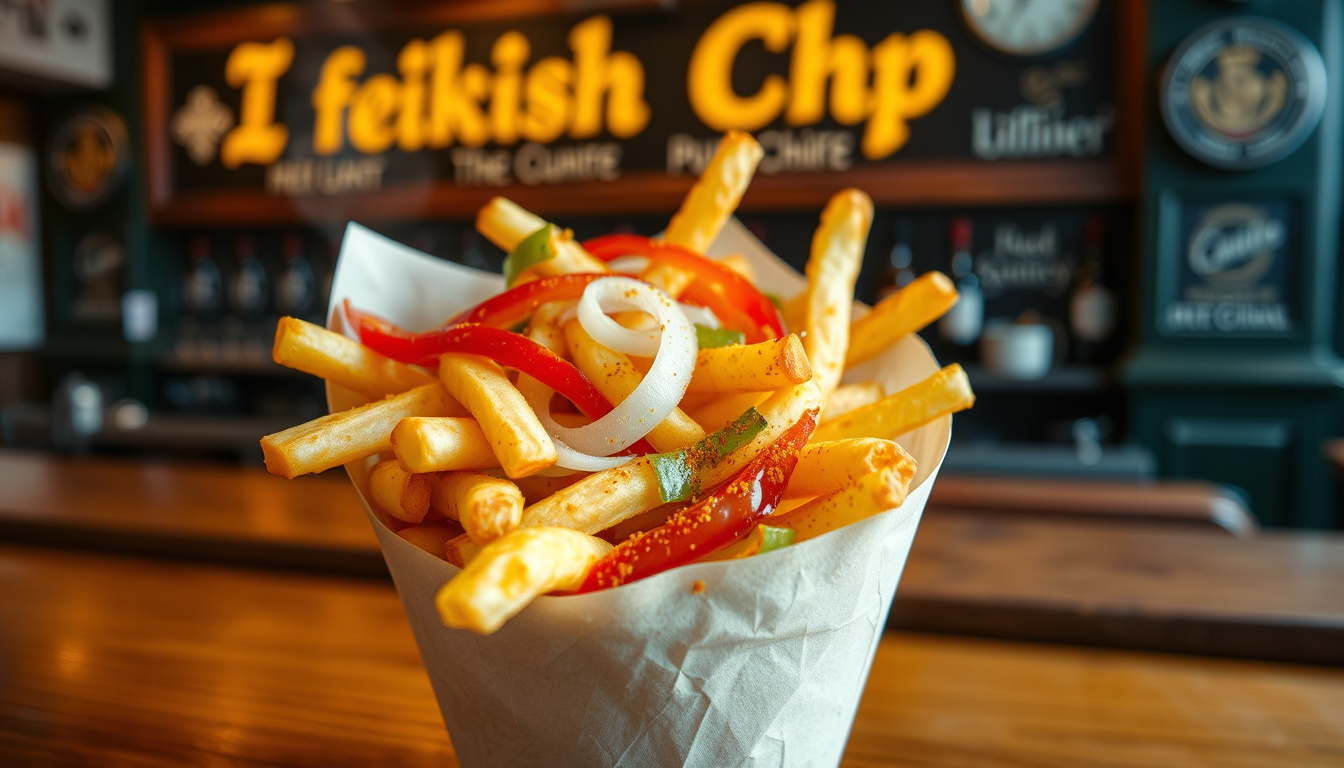

The Irish spice bag has transformed from an obscure Dublin takeaway creation into a culinary sensation that now features in the Oxford English Dictionary. This unassuming paper sack contains a fiery fusion of crispy fried chicken, thick-cut chips, stir-fried vegetables, and a generous shake of Chinese-inspired spices that has captured the hearts and appetites of Ireland. What began as an off-menu staff meal at a Chinese takeaway in Templeogue has become a cultural phenomenon worth exploring in detail.
For those unfamiliar with this cult favorite, the spice bag represents something distinctly Irish despite its Asian roots. It blends the deep-fried indulgence Ireland has long loved in its chip shops with the bold flavors of Chinese cuisine, creating a snack that satisfies on multiple levels. The combination of crunchy elements, spicy heat, and salty seasoning produces what fans describe as an addictive eating experience that keeps them returning for more.
What Is an Irish Spice Bag?
An Irish spice bag is a fast-food dish consisting of crispy fried chicken pieces, thick-cut chips, stir-fried onions and peppers, fresh chilies, and a generous coating of aromatic spices. The components are typically combined in a paper bag and shaken together, allowing the seasoning to coat every surface. This creates a dish where every bite delivers a mix of textures and flavors, from the crunch of fried batter to the soft interior of tender chicken.
The spice profile typically centers on Chinese five-spice, a blend that includes star anise, fennel seeds, cloves, cinnamon, and Szechuan peppercorns. Additional heat comes from chili powder, flakes, and fresh chilies ranging from jalapeños to the incendiary bird’s-eye variety. Garlic powder, salt, white pepper, and sometimes brown sugar complete the seasoning, creating layers of savory, sweet, and spicy elements that differentiate each establishment’s version.
- Fusion of Irish chips and Asian spices
- Arose through social media buzz in Dublin
- Not traditional Irish cuisine but distinctly local
- Spice mixture varies significantly between shops
- Plant-based and vegan adaptations now available
- Often enjoyed with curry sauce on the side
- Entered Oxford English Dictionary in 2025
| Attribute | Details |
|---|---|
| Invented | Dublin chip shops circa 2006 |
| Core Components | Chips, chicken, onions, peppers, chilies, spices |
| Calories (est.) | 800-1200 per bag |
| Signature Element | Five-spice heavy seasoning |
| Primary Location | Templeogue, Dublin |
| Cultural Status | 2020 Just Eat Awards favorite |
Most establishments serve spice bags with a side of curry sauce. The combination of spicy, crunchy contents with the cooling, tangy curry creates a balanced flavor experience that many fans consider essential to the full experience.
Origin and History of the Spice Bag
The spice bag emerged from the Chinese takeaway shops that have long dotted the Irish landscape, particularly in Dublin’s suburbs. At Sunflower Chinese in Templeogue, staff members began combining leftover ingredients after hours around 2006, creating what would become the blueprint for the dish. The original creation combined crispy chicken pieces with thick-cut chips and whatever vegetables remained from the day’s service, all shaken together with an aromatic spice blend.
Word spread initially through friends and regular customers who sampled the experimental creation during visits to the takeaway. The popularity of this off-menu item grew steadily until the establishment officially added it to their menu, recognizing the demand from customers who had heard about the dish through personal recommendations. RTÉ reporter Liam Geraghty traced these origins in 2016, documenting how a staff meal evolved into a national phenomenon.
Dublin embraced the spice bag enthusiastically, with the dish spreading rapidly across the city through the early 2010s. The first sale through Just Eat occurred in 2012, marking the beginning of the dish’s digital expansion. Food delivery platforms amplified visibility, and by 2015, social media buzz had transformed the spice bag from a Dublin secret into a recognized Irish comfort food.
- Around 2006: Sunflower Chinese staff create the original recipe using leftover ingredients after closing.
- Early 2010s: The dish spreads across Dublin’s Chinese takeaways, gaining menu status at multiple establishments.
- 2012: First Just Eat order places the spice bag in the digital marketplace.
- 2015-2018: Social media campaigns and food bloggers propel the dish to national recognition.
- 2020: Spice bag voted Ireland’s favorite takeaway dish at the Just Eat Awards.
- 2025: Entry into the Oxford English Dictionary formalizes its status as a cultural artifact.
By the time of its dictionary recognition, the spice bag had developed a substantial following, including a dedicated Facebook group approaching 17,000 members. Petitions have circulated proposing a National Spice Bag Day, and merchandise has appeared celebrating the dish. The journey from staff meal to dictionary entry illustrates how culinary innovations can transcend their humble origins to become cultural touchstones.
While some sources suggest the spice bag may have originated in Galway or Cork, the overwhelming evidence points to Dublin’s Templeogue as the birthplace. The Sunflower Chinese establishment remains the benchmark against which other versions are measured, and no competing claim has gained equivalent documentation from credible sources.
How to Make an Authentic Spice Bag Recipe
Creating a spice bag at home requires attention to each component, as the dish consists of several distinct elements that must be prepared separately before being combined. The chicken forms the centerpiece, typically coated in a seasoned flour batter before deep-frying until golden and crispy. Preparation involves coating bite-sized chicken pieces in a mixture of flour, Chinese five-spice, garlic powder, salt, and chili before frying at high temperatures.
Preparing the Chicken
The chicken component works best with boneless thigh meat, cut into chunks or shaped into balls. The flour coating should be mixed with the spice blend before coating the chicken pieces thoroughly. Frying occurs in hot oil until the exterior achieves a deep golden color and the coating has set into a crunchy shell. Draining on paper towels removes excess oil while maintaining the desired crispiness.
The Spice Mix
The signature flavor comes from the spice mixture, which typically combines Chinese five-spice with additional chili powder, garlic powder, salt, white pepper, and a touch of brown sugar. Some establishments add paprika for color, ground ginger for warmth, or cardamom for complexity. The exact proportions remain closely guarded secrets at many takeaways, with each shop claiming their blend produces the definitive version.
Vegetables and Assembly
Stir-fried vegetables provide textural contrast and freshness. Sliced onions and bell peppers form the base, sometimes supplemented with carrots or other vegetables. These are cooked quickly over high heat to maintain crunch before being combined with the fried elements. Fresh chilies, typically sliced, add volatile heat that varies with each bite.
Bird’s-eye chilies deliver intense heat but can overwhelm the other flavors. Many home cooks prefer starting with jalapeños or red chilies, adjusting the bird’s-eye quantity based on personal tolerance. The heat can also be modulated by removing the seeds and white membrane from fresh chilies before slicing.
Final assembly involves placing the crispy chips, fried chicken, stir-fried vegetables, and fresh chilies into a paper bag. The spice mixture is added generously, and the bag is shaken vigorously to coat every surface. The coated contents are then dumped onto a plate or directly into a serving container, with any remaining spice blend sprinkled over the top.
Home cooks can also purchase pre-made spice bag seasoning blends, which simplify the process while approximating the takeaway experience. These blends combine the essential spices in balanced proportions, requiring only the addition of the cooked components and a thorough shake. Accurate measurement becomes easier when following written recipes rather than estimating proportions by eye.
Best Spice Bags in Ireland and Dublin
For visitors seeking the authentic experience, Sunflower Chinese in Templeogue remains the essential destination. As the originator, this establishment sets the standard against which all others are measured. The chicken achieves optimal crispness, the seasoning distributes evenly, and the overall balance demonstrates what makes the dish distinctive. Many locals consider this the benchmark that defines the category.
Beyond Sunflower, Dublin offers numerous options for spice bag enthusiasts, with establishments throughout the city preparing their own interpretations. Community recommendations from the Spice Bag Appreciation Society and social media channels highlight various venues, with praise often focusing on specific attributes like vegetable quantity, spice intensity, or chip thickness. Reviews suggest that higher vegetable content often signals a quality establishment, as it demonstrates willingness to include fresh elements rather than relying solely on fried components.
Platforms like Just Eat provide current ratings and customer reviews that can guide selection based on recent experiences. The concentration of quality options remains highest in Dublin, but the dish has spread throughout Ireland, with establishments in most towns now offering their versions. Irish pubs in other countries have also begun serving spice bags, introducing the concept to international audiences.
Variations Worth Exploring
Some restaurants have elevated the spice bag concept, using free-range chicken, hand-cut chips, and premium spice blends to create upscale versions. Deconstructed presentations place the elements on plates rather than in bags, appealing to customers seeking a more refined dining experience. Vegan and vegetarian options substitute plant-based chicken alternatives or increase vegetable content to accommodate different dietary requirements.
Online review platforms and local food communities provide the most current information about which establishments maintain high standards. Since quality can fluctuate over time, recent reviews offer more reliable guidance than older recommendations. Local food bloggers and social media accounts dedicated to Dublin dining often share updated rankings and hidden gems.
Spice Bag vs Other Irish Takeaways
Understanding the spice bag requires distinguishing it from similar dishes that share Irish chip shop heritage. Curry chips represent the most common comparison point, as both dishes center on chips as a foundation. However, curry chips consist simply of chips covered in curry sauce, lacking the chicken, vegetables, and dry spice coating that define the spice bag experience.
The spice bag adds considerable complexity through its multiple components and the textural contrast between fried and stir-fried elements. Where curry chips deliver uniform saucy coverage, spice bags provide changing experiences as each bite combines different proportions of chicken, vegetables, and chips with varying spice intensity. The dry seasoning also creates a crunchy coating absent in saucy alternatives.
The dish shares DNA with other Irish-Chinese fusion creations that emerged from immigrant communities adapting their culinary traditions for local tastes. However, the specific combination of deep-fried chicken, chunky chips, fresh vegetables, and aromatic spice blend appears unique to the spice bag format. No equivalent dish has achieved comparable recognition or spread to the same extent.
Authenticity Considerations
Authenticity for the spice bag derives not from traditional Chinese cuisine but from the Dublin Chinese takeaway context where it emerged. The dish represents immigrant innovation rather than cultural preservation, with chefs adapting recipes based on available ingredients and customer preferences. Ireland’s existing love of chips influenced the inclusion of generous chip portions, while Chinese stir-fry techniques and spice profiles provided the flavor foundation.
This authenticity means that variations are inherent to the dish rather than representing deviations from a standard recipe. Each establishment’s version reflects the specific interpretations of its creators, and no single version claims superiority over others. The diversity of interpretations has contributed to the dish’s ongoing evolution, with new variations regularly appearing as chefs experiment with different spice blends and ingredient combinations.
Spice bags are high-calorie comfort food designed for indulgence rather than nutrition. A typical serving contains 800 to 1200 or more calories, driven primarily by fried chicken and chips. The dish offers minimal nutritional value despite its satisfying flavor profile. Those monitoring calorie intake should consider the spice bag an occasional treat rather than a regular dietary addition.
Spice Bag: What We Know and What Remains Uncertain
The spice bag’s origins are well-documented through media coverage and the establishment’s own accounts, though some details remain open to interpretation. The broad strokes of the story, from Sunflower Chinese in Templeogue to national recognition, have been verified through multiple sources including various food publications and news outlets.
| Established Information | Uncertain or Unverified Details |
|---|---|
| Sunflower Chinese in Templeogue created the dish | Exact identity of the original creator remains unclear |
| The dish emerged around 2006 | Specific spice ratios used by different shops are proprietary |
| Core ingredients are consistent across establishments | Whether similar dishes existed before 2006 remains unverified |
| Dublin remains the epicenter of quality and innovation | Regional claims from Galway or Cork lack supporting documentation |
Understanding the Spice Bag’s Cultural Context
The spice bag phenomenon reflects broader patterns in food culture evolution, where immigrant communities create new dishes by combining elements from their culinary heritage with local preferences. In Ireland’s case, Chinese takeaway operators recognized an opportunity to differentiate their offerings by incorporating Ireland’s deep affection for chips into a format that leveraged their existing expertise in stir-frying and seasoning.
The dish gained momentum through social media platforms that allowed enthusiasts to share their discoveries with broader audiences. Food photography and enthusiastic descriptions sparked curiosity among those who had not encountered the dish, creating demand that spread beyond Dublin’s immediate vicinity. Kitchen appliance enthusiasts and home cooking communities have also contributed to awareness, sharing recipes and technique discussions that enable replication in domestic settings.
Global food trends suggest that fusion dishes often achieve recognition when they strike balances between familiar and exotic elements. The spice bag succeeds by delivering recognizable comfort food components, particularly the universally appealing combination of fried chicken and potatoes, while introducing Asian spice flavors that add excitement without requiring adventurous eating. This accessibility has facilitated acceptance among demographics that might otherwise avoid unfamiliar cuisines.
Spice Bag: Sources and Perspectives
Coverage of the spice bag has appeared in numerous Irish and international media outlets, providing multiple perspectives on the dish’s significance. Food writers have explored its origins, documented its spread, and analyzed its cultural implications, creating a body of coverage that supports understanding of the phenomenon.
The spice bag represents something genuinely new under the Irish culinary sun, born from the creativity of immigrant cooks adapting traditional recipes to local tastes.
— Irish Times Food Section
Food journalists and culinary experts have contributed analysis that places the spice bag within broader contexts of Irish food evolution and global fusion trends. The dish’s entry into the Oxford English Dictionary represents formal recognition of its cultural significance, validating the community sentiment that had already embraced it as a defining element of contemporary Irish takeaway culture.
Summary: The Rise of Ireland’s Favorite Takeaway
The Irish spice bag traces a remarkable path from accidental creation to cultural icon, demonstrating how food innovations can capture national imagination when they align with prevailing tastes and timing. What began as staff at a Dublin Chinese takeaway combining leftovers has become a dish that defines Irish takeaway culture for a generation, recognized even by the guardians of the English language. The combination of crispy fried chicken, thick chips, fresh vegetables, and bold spice blend delivers exactly what comfort food should, satisfying cravings while offering enough complexity to sustain repeated enjoyment.
Visitors to Ireland, particularly Dublin, can experience the original at Sunflower Chinese or explore the various interpretations available throughout the city. Home cooks can attempt replication using readily available ingredients and spice blends, potentially discovering their own preferred ratios and combinations. Whether enjoyed as an occasional treat or a regular ritual, the spice bag represents a genuine success story in culinary innovation, proving that sometimes the most satisfying dishes emerge from humble circumstances and accidental creativity.
Frequently Asked Questions
What exactly is an Irish spice bag?
An Irish spice bag is a takeaway dish consisting of crispy fried chicken, thick-cut chips, stir-fried vegetables, fresh chilies, and aromatic spices, all combined in a paper bag and shaken together with generous seasoning.
Is the spice bag found only in Ireland?
While the spice bag originated in Dublin and remains most authentic in Ireland, similar dishes have appeared in Irish pubs abroad and some international takeaways seeking to replicate the experience.
What makes the spice bag spicy?
The heat primarily comes from chili powder, flakes, and fresh chilies. Bird’s-eye chilies provide intense heat, while jalapeños and red chilies offer milder alternatives. The amount used varies by establishment and personal preference.
How did the spice bag originate?
Staff at Sunflower Chinese in Templeogue, Dublin, created the dish around 2006 by combining leftover ingredients after closing. The off-menu item gained popularity through word of mouth before being added to the official menu.
What’s the difference between a spice bag and curry chips?
Curry chips consist only of chips with curry sauce. Spice bags add fried chicken, vegetables, fresh chilies, and dry spice seasoning, creating a more complex dish with varied textures and flavors.
Where can I find the best spice bag in Dublin?
Sunflower Chinese in Templeogue remains the originator and benchmark. Beyond this establishment, numerous Dublin takeaways offer their own interpretations, with reviews suggesting quality varies across the city.
Can I make a spice bag at home?
Yes, home preparation involves frying seasoned chicken, cooking vegetables in a wok, preparing chips separately, then combining everything in a bag with spice mixture for shaking. Pre-made spice blends simplify the seasoning process.
Is the spice bag considered traditional Irish food?
No, it is an Irish-Chinese fusion created by immigrant chefs adapting to local tastes. Despite not being traditional, it has achieved cultural significance and is now recognized as distinctly Irish in character.

Andrew Patel leads fact-checking, source verification and corrections at Aussie Focus Hub.