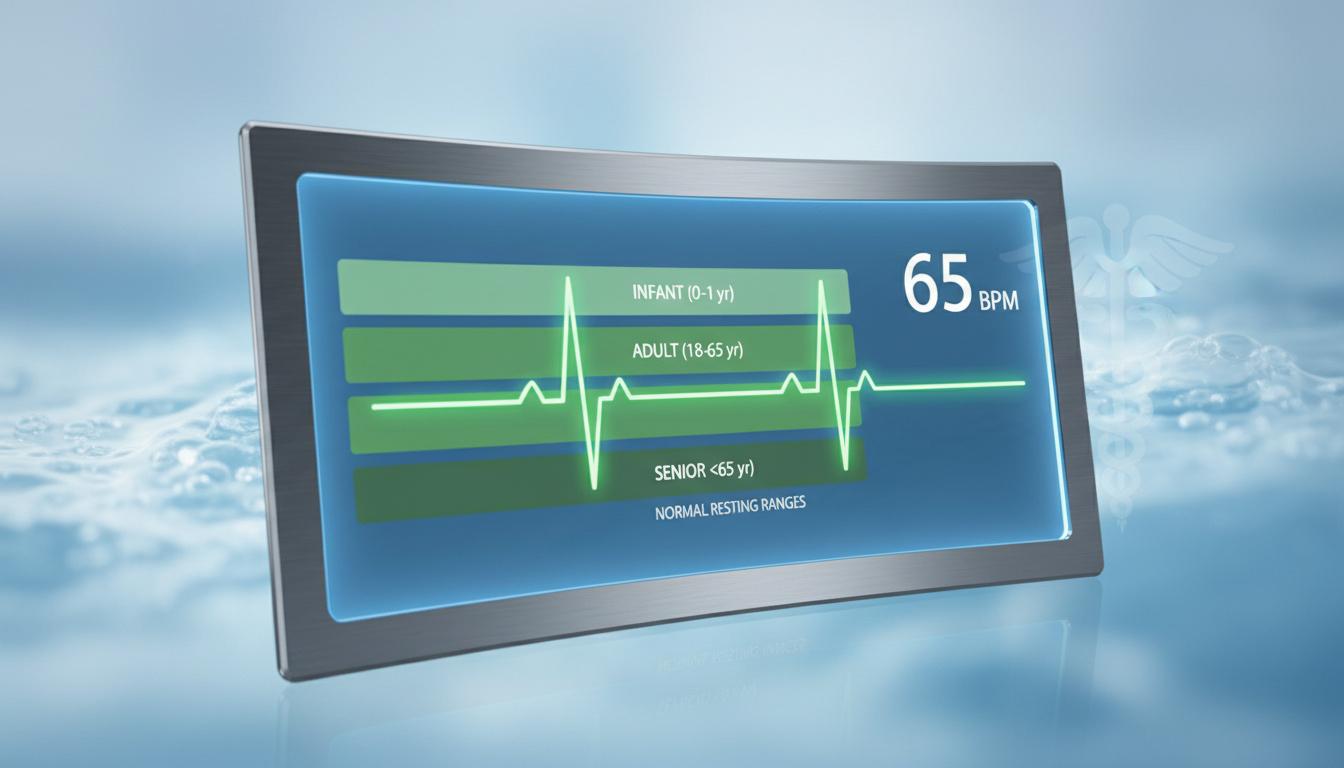

Resting heart rate serves as a window into cardiovascular health, offering a simple yet powerful metric that reflects how efficiently your heart pumps blood throughout the body. This measurement, taken while you are awake, calm, and completely motionless, provides crucial insights into fitness levels, potential health risks, and overall cardiac function.
Medical professionals routinely use this vital sign to assess baseline cardiovascular condition. Whether monitored through wearable technology or manual pulse checks, understanding what constitutes normal ranges helps individuals recognize when their heart rhythm might signal underlying concerns requiring attention.
What Is a Normal Resting Heart Rate?
Heartbeats per minute while awake, calm, and motionless
60 to 100 beats per minute
Often 40 to 60 beats per minute
Marker of cardiovascular fitness and general wellness
- Lower resting heart rates typically indicate superior cardiovascular fitness
- Single readings matter less than trends observed over weeks or months
- Women generally display slightly higher resting rates than men across age groups
- Caffeine consumption and certain medications can artificially elevate measurements
- Well-trained athletes often register 40-60 bpm without health concerns
- Temperature and hormone fluctuations affect daily readings
- Genetics play a significant role in establishing individual baselines
| Age Group | Normal Range (bpm) | Athlete Range (bpm) |
|---|---|---|
| Newborns (0-4 weeks) | 100-205 | N/A |
| Infants (4 weeks-1 year) | 100-180 | N/A |
| Toddlers (1-3 years) | 98-140 | N/A |
| Preschoolers (3-5 years) | 80-120 | N/A |
| School-age (5-12 years) | 75-118 | N/A |
| Adolescents (13-18 years) | 60-100 | 40-60 |
| Adults (18-65 years) | 60-100 | 40-60 |
| Seniors (65+ years) | 60-100 | 40-80 |
For adults, the medically accepted normal range spans 60 to 100 beats per minute, though individual factors like fitness level and medical history create significant variation within this spectrum. The Mayo Clinic emphasizes that lower rates generally correlate with better cardiovascular efficiency.
What Is a Good Resting Heart Rate by Age?
While 60-100 bpm defines the normal medical range, most healthy adults actually fall between 55 and 85 bpm, with lower values typically indicating better cardiovascular conditioning. Age and biological sex create distinct patterns that influence these benchmarks.
Adult Ranges and Gender Differences
Women typically experience slightly higher resting heart rates than men across all age brackets. Data shows that women aged 18-25 average 60-80 bpm, while those 65+ range from 66-90 bpm. Men’s rates generally trend 2-5 bpm lower across equivalent age groups.
Pediatric Benchmarks
Children exhibit naturally faster heart rates that gradually decrease with age. Adolescents aged 13-18 transition to adult-like ranges of 60-100 bpm, while younger children maintain significantly higher baselines necessary for their metabolic demands and developing cardiovascular systems.
Athletic Performance Indicators
Well-trained athletes often maintain resting heart rates between 40 and 60 beats per minute. This efficiency indicates that the heart muscle has strengthened and requires fewer contractions to circulate blood throughout the body.
Elite endurance athletes may record rates as low as 40 bpm without pathology. This bradycardia reflects increased stroke volume—the amount of blood pumped per beat—rather than cardiac dysfunction.
How Do You Measure Your Resting Heart Rate?
Accuracy depends heavily on measurement conditions. The body must be fully at rest, free from recent physical activity, emotional stress, or stimulant consumption.
Proper Measurement Technique
Cleveland Clinic guidelines recommend sitting or lying down while awake, remaining completely calm for several minutes before counting. Place two fingers on the radial artery at the wrist or carotid artery in the neck. Count beats for 60 seconds, or count for 15 seconds and multiply by four for an equivalent measurement.
Timing and Conditions
Morning measurements, taken immediately upon waking but before rising from bed, typically provide the most consistent baseline data. Avoid measuring after caffeine intake, during illness, or following stressful events, as these factors temporarily elevate heart rate.
For those looking to purchase fitness tracking equipment locally, see the Spotlight Mt Druitt store guide for regional shopping options.
What Causes Abnormal Resting Heart Rates?
Values falling outside standard ranges may indicate athletic conditioning, medical conditions, or temporary physiological states. Context determines whether deviations require intervention.
Understanding Bradycardia
Rates below 60 bpm, termed bradycardia, can be perfectly normal for athletic individuals or those taking certain cardiac medications. However, excessively low rates accompanied by dizziness, chest discomfort, fatigue, or fainting spells may indicate electrical conduction issues requiring medical evaluation.
Recognizing Tachycardia
Consistent readings above 100 bpm at rest, known as tachycardia, may signal dehydration, fever, anemia, hyperthyroidism, or cardiac arrhythmias. The American Heart Association notes that persistent elevation without identifiable cause warrants professional assessment.
Warning Signs Requiring Medical Attention
Seek immediate care if rapid or slow heart rates coincide with shortness of breath, chest pain, fainting, or confusion. These symptoms may indicate serious cardiac events requiring emergency intervention.
Resting heart rates consistently exceeding 100 beats per minute or falling below 50 beats per minute—when accompanied by dizziness, chest discomfort, or fainting—warrant immediate medical evaluation.
Research indicates that a resting heart rate below 60 beats per minute can be perfectly normal for athletic individuals. Context matters more than isolated numbers.
How Does Resting Heart Rate Change Across the Lifespan?
-
Newborn Phase (Birth to 4 weeks):
Heart rates range from 100-205 bpm as the infant cardiovascular system establishes independent circulatory function outside maternal support.
-
Infancy (4 weeks to 1 year):
Rates stabilize between 100-180 bpm, gradually slowing as the heart muscle strengthens and circulatory efficiency improves. For more information on resting heart rate, consult our cruises guide.
-
Early Childhood (1-5 years):
Preschoolers maintain 80-140 bpm, with individual variation reflecting activity levels and developmental stages.
-
School Age (5-12 years):
Baseline rates decrease to 75-118 bpm, approaching adult ranges as cardiovascular capacity matures.
-
Adolescence (13-18 years):
Hormonal changes and growth spurts maintain rates between 60-100 bpm, with athletic training beginning to noticeably lower individual baselines.
-
Adulthood (18-65 years):
Standard ranges settle at 60-100 bpm, though fitness improvements can push healthy individuals toward 50-60 bpm ranges.
-
Senior Years (65+):
Natural aging may cause slight increases or greater variability, with sustained fitness helping maintain lower rates comparable to younger adults.
For additional local resources, consult the Harvey Norman Alice Springs guide.
What Is Definitively Known About Resting Heart Rate?
| Established Facts | Areas of Uncertainty |
|---|---|
| Normal adult range is 60-100 bpm | Exact thresholds distinguishing athletic bradycardia from pathological conditions |
| Lower rates indicate higher fitness in healthy individuals | Long-term implications of consistently borderline elevated rates (95-100 bpm) |
| Measurement requires awake, resting state for accuracy | Individual optimal rates without complete medical history review |
| Regular exercise lowers resting rate over time | Specific genetic factors influencing baseline variations |
Why Does Resting Heart Rate Matter for Health?
This metric functions as a reliable barometer of cardiovascular efficiency. Hearts that pump blood effectively with fewer beats experience less wear over time and typically indicate robust circulatory health. Population studies consistently link lower resting rates with reduced cardiovascular mortality, though individual medical contexts always modify these associations.
Beyond cardiac fitness, resting heart rate reflects autonomic nervous system balance, hydration status, and recovery from physical stress. Athletes use this data to prevent overtraining, while clinicians track it to monitor medication effects and disease progression.
Daily influences including sleep quality, stress levels, and substance use create temporary fluctuations that, when tracked consistently, provide feedback about lifestyle impacts on physiological health.
What Do Medical Authorities Say About Resting Heart Rate?
“A resting heart rate consistently over 100 bpm may indicate underlying cardiovascular issues requiring professional evaluation.”
American Heart Association
“Resting heart rate is the number of beats per minute your heart takes while you are awake, calm, and not moving.”
Mayo Clinic Cardiovascular Guidelines
What Are the Essential Facts About Resting Heart Rate?
Normal adult resting heart rates range from 60-100 bpm, with 55-85 bpm representing optimal health for most individuals. Measurement requires a calm, awake, resting state, preferably in the morning. While athletes may safely maintain 40-60 bpm, rates below 50 or above 100 bpm accompanied by symptoms demand medical attention. Regular aerobic exercise remains the most effective method for lowering resting heart rate and improving cardiovascular efficiency over time.
Common Questions About Resting Heart Rate
What does resting heart rate tell you?
It indicates cardiovascular fitness and autonomic nervous system function. Lower rates generally suggest efficient cardiac output and better aerobic conditioning, while elevated rates may signal stress, dehydration, or underlying pathology.
What causes high resting heart rate?
Temporary causes include caffeine, anxiety, dehydration, and fever. Persistent elevation may indicate hyperthyroidism, anemia, infection, or cardiac arrhythmias requiring medical diagnosis.
Does anxiety raise resting heart rate?
Yes. Stress and anxiety activate the sympathetic nervous system, releasing adrenaline and cortisol that accelerate heart rate. Chronic anxiety may maintain elevated baselines until the stressor resolves.
How to lower resting heart rate?
Consistent aerobic exercise strengthens the heart muscle, increasing stroke volume and reducing beats needed per minute. Adequate sleep, hydration, and stress management also contribute to lower rates.
Is 70 bpm a good resting heart rate?
Yes. Seventy beats per minute falls comfortably within the optimal range for healthy adults and indicates normal cardiovascular function without pathology.
Is a resting heart rate of 80 bad?
Eighty bpm is medically normal but approaches the higher end of the optimal range. Improving cardiovascular fitness through exercise may naturally reduce this toward 60-70 bpm over time.
When to worry about resting heart rate?
Consult physicians for rates consistently below 50 or above 100 bpm, especially when accompanied by dizziness, chest pain, shortness of breath, or fainting episodes.
Related stories


Liam O'Brien covers Australian politics and public affairs for Aussie Focus Hub.