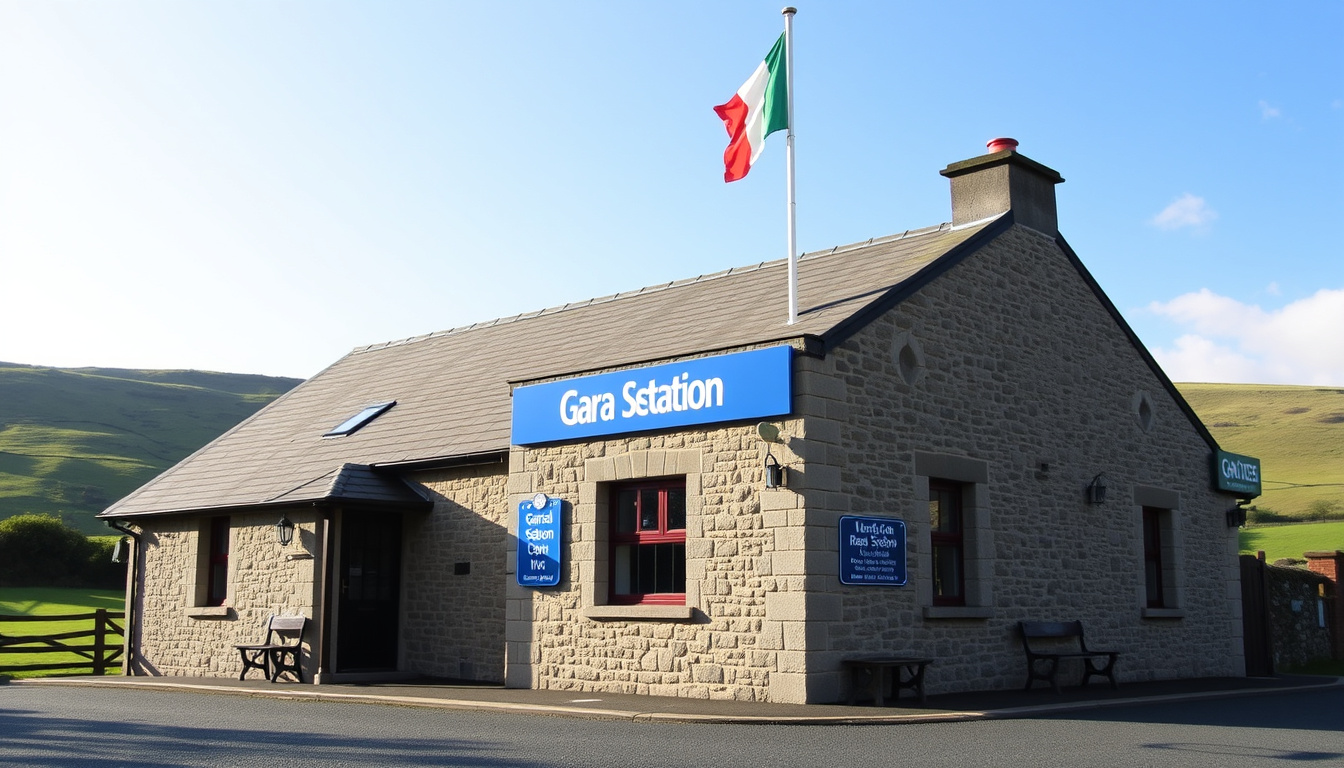

Need to reach a Garda station but not sure where to start? You’re not alone — knowing the right number to call or finding your nearest station can save precious time when it matters most. This guide walks you through every contact option available across Ireland, from emergency numbers to local station direct lines, plus what you need to know about your rights when dealing with Gardaí.
Emergency Number: 999 or 112 ·
Non-Emergency Line: 101 ·
Official Directory: garda.ie/station-directory ·
Gov.ie Finder: gov.ie find nearest ·
Balbriggan Contact: +353 1 666 4500
Quick snapshot
- Search garda.ie directory by division (Garda.ie Station Directory)
- Use gov.ie nearest station finder (Gov.ie)
- Check Google Maps for locations near you (Garda.ie Station Directory)
- 999/112 for life-threatening emergencies (Garda.ie)
- 101 for non-urgent matters (Garda.ie)
- Station direct phone lines available (Garda.ie)
- Refusing to give your name in certain situations
- Recording Gardaí on video
- Answering the door to Gardaí
- Response time depends on call priority
- Email contacts monitored during office hours only
- Anonymous tip line: 1800 666 111
| Contact Type | Details |
|---|---|
| Primary Emergency Line | 999 or 112 |
| Non-Emergency Line | 101 |
| Station Finder | Garda.ie Station Directory |
| Gov Service | Gov.ie Nearest Station Finder |
| Confidential Line | 1800 666 111 |
| Example Station | Balbriggan: +353 1 666 4500 |
| Store Street Station | +353 1 666 8000, 4-6 Store Street, Dublin 1, D01 W773 |
| Sligo Garda Station HQ | 07191 57000, Pearse Road, Co. Sligo, F91 E372 |
How do I get in touch with my local police station?
Ireland’s national police service, An Garda Síochána, operates stations across every county — but finding yours requires knowing where to look. The official station directory lets you search by division, covering regions like Louth/Cavan/Monaghan, Clare/Tipperary, and Cork City.
Using the Garda Station Directory
- Visit Garda.ie Station Directory and select your division
- Each division page lists stations with addresses, phone numbers, and divisional headquarters
- The Dublin Metropolitan Region uses unique letter codes for districts — Store Street is District C
The pattern across all divisions is consistent: headquarters stations carry more staffing and services, while smaller stations operate on reduced hours. Use the Garda.ie official station directory to verify details before visiting.
Gov.ie Nearest Station Finder
- The Gov.ie service offers a straightforward lookup by station name or division
- This is the government’s official tool for locating your nearest Garda station
Google Maps Search
- Search “Garda station near me” on Google Maps for quick location results
- Check that the listing matches an official garda.ie station
How to contact police in Ireland?
An Garda Síochána’s headquarters are located in Dublin’s Phoenix Park, but you don’t need to go there to get help. Several contact options exist depending on whether your situation is an emergency or something less urgent.
Emergency vs Non-Emergency
- 999 or 112: Call these numbers for immediate, life-threatening emergencies — crimes in progress, violent situations, or medical crises requiring police response
- 101: Use this for non-urgent matters where police assistance is needed but there’s no immediate threat
The implication: dialling 999 for non-emergencies diverts resources from genuine crises. An Garda Síochána reports that response times depend on call priority, so accurate classification matters.
Station Phone Numbers
- Store Street Garda Station (Dublin 1): +353 1 666 8000
- Balbriggan Garda Station: +353 1 666 4500
- Sligo Garda Station HQ: 07191 57000
Email Contacts
- Station emails are monitored during normal office hours only — do not rely on email for emergencies
- Garda Headquarters: +353 1 666 (general line)
Emails to Garda stations are monitored during normal office hours only, according to Garda Síochána’s official station directory. If you need an immediate response, call 101 or 999 instead.
How to make a non-urgent call to the police?
Calling 999 for non-emergencies ties up lines needed for genuine crises. Here’s how to contact police appropriately when time allows.
Using the 101 Line
- Dial 101 for non-urgent police matters — this is a free call from any Irish phone
- Examples include reporting a theft that occurred hours ago, giving information about crime, or requesting a welfare check
Local Station Direct
- Look up your local station’s direct number from the Garda Síochána Station Directory
- Calling direct often gets you to someone who knows your area
Online Reporting Options
- For certain crimes like theft or criminal damage, you may be able to report online through the Garda website
- Anonymous reporting is available through the Garda Confidential line: 1800 666 111
Can you refuse to give your name to a Garda?
This is a question many people hesitate to ask. Understanding your rights before an encounter with Gardaí helps you respond calmly and knowledgeably.
Legal Rights Overview
- In Ireland, you generally have the right to refuse to give your name and address if you are not suspected of an offence
- However, certain situations can legally require identification
- The Irish Council for Civil Liberties provides guidance on these rights
When Required
- If a Garda reasonably suspects you have committed an offence, they may require your name and address
- Road traffic incidents typically require licence and insurance details
- Refusing to give details when legally required is itself an offence
Civil Liberties Guidance
- Know your rights before any interaction
- If unsure, ask “Am I being detained?” — this is a reasonable question to ask
- You can seek legal advice before providing information
The Garda Síochána operates under Irish law — you are not obligated to answer questions beyond basic identification when required. The Irish Council for Civil Liberties offers resources if you believe your rights have been infringed.
Do I legally have to answer the door?
Nobody enjoys unexpected visitors, even when they’re wearing uniforms. Here’s what the law says about Gardaí appearing at your door.
Knock and Talk Rules
- Gardaí can approach your home to speak with you — this is not inherently intrusive
- You are generally not required to open the door
- However, cooperation with reasonable police enquiries is generally expected
Warrant Requirements
- Without a warrant, Gardaí generally cannot force entry without your consent
- Exceptions exist for emergencies — if they believe someone inside is in danger, for example
- They can ask you to step outside to speak with them
Garda Entry Powers
- A warrant signed by a judge gives Gardaí certain powers of entry
- Evidence gathering in criminal investigations may involve warrant applications
- Always ask to see identification and, if in doubt, ask why they want to enter
Steps: Finding and Contacting Your Nearest Garda Station
Step 1: Identify Whether It’s an Emergency
- Life-threatening situations, crimes in progress, or immediate danger → Call 999 or 112
- Non-urgent matters like past crimes, information sharing, or general enquiries → Continue to Step 2
Step 2: Use the Official Finder
- Go to Gov.ie nearest station finder or the Garda.ie Station Directory
- Enter your location or select your division
- Note the phone number for your local station
Step 3: Call the Appropriate Number
- For non-urgent matters, call 101 first, or dial the station direct
- Have your address and details ready to describe your situation
- If calling outside office hours, note that email responses won’t be immediate
Step 4: Know Your Rights
- You can refuse to give your name if not suspected of an offence
- You don’t have to open your door without a warrant
- You can record interactions with Gardaí in public spaces
Call 999/112 or your local Garda Station if an immediate response is required.
— An Garda Síochána official station directory (Official Policy)
Emails are monitored during normal office hours.
— An Garda Síochána station contact page (Official Notice)
Summary
Finding your nearest Garda station in Ireland is straightforward once you know the official channels — gov.ie and garda.ie both provide verified directories, while 999/112 and 101 handle emergency and non-emergency calls respectively. Store Street Garda Station in Dublin, for example, can be reached at +353 1 666 8000, with its address at 4-6 Store Street, Dublin 1, D01 W773.
Your rights during Garda interactions matter just as much as knowing how to contact them. You can refuse to give your name when not suspected of an offence, you’re not obligated to open your door without a warrant, and recording Gardaí in public spaces is generally permitted. For residents across Ireland, using the official Garda Síochána Station Directory means you get accurate, up-to-date contact information directly from the source rather than relying on potentially outdated third-party listings.
Related reading: Flight Centre Near Me – Locations, Hours, Directions
garda.ie, limerick.ie, data.gov.ie, nosta.ie, en.wikipedia.org, garda.ie, garda.ie, redbook.ie
Related coverage: Garda police certificate guide fördjupar bilden av National Police Check in Ireland: Free Garda Certificate.
Frequently asked questions
How much does it cost to call the police in Ireland?
Calling 101 (non-emergency) is free from any Irish phone. Emergency numbers 999 and 112 are also free to call. Standard mobile call rates may apply if calling from abroad.
Are you allowed to record Garda?
Yes, you can generally record Gardaí in public spaces where there is no reasonable expectation of privacy. This is protected under freedom of expression principles.
What is the law regarding recording the Gardaí on video?
Recording police officers performing their duties in public is typically legal in Ireland. You should not obstruct officers while recording, and footage should not be used for harassment purposes.
Can a Garda enter your home?
A Garda cannot force entry into your home without a warrant or your consent, except in emergency situations where they believe someone inside is in danger or evidence may be destroyed.
How do I ring local police?
For non-urgent matters, call 101 or look up your local station’s direct number on the Garda Síochána Station Directory. For emergencies, call 999 or 112.
How do you call the local police?
You can call An Garda Síochána by dialing 999/112 for emergencies, 101 for non-urgent matters, or by finding your specific station’s number through the official directory.
Can you refuse to give your name to a Garda?
Generally, yes, if you are not suspected of an offence. However, if a Garda reasonably suspects you have committed a crime, they can require your name and address. Refusing when legally required is an offence.

Andrew Patel leads fact-checking, source verification and corrections at Aussie Focus Hub.