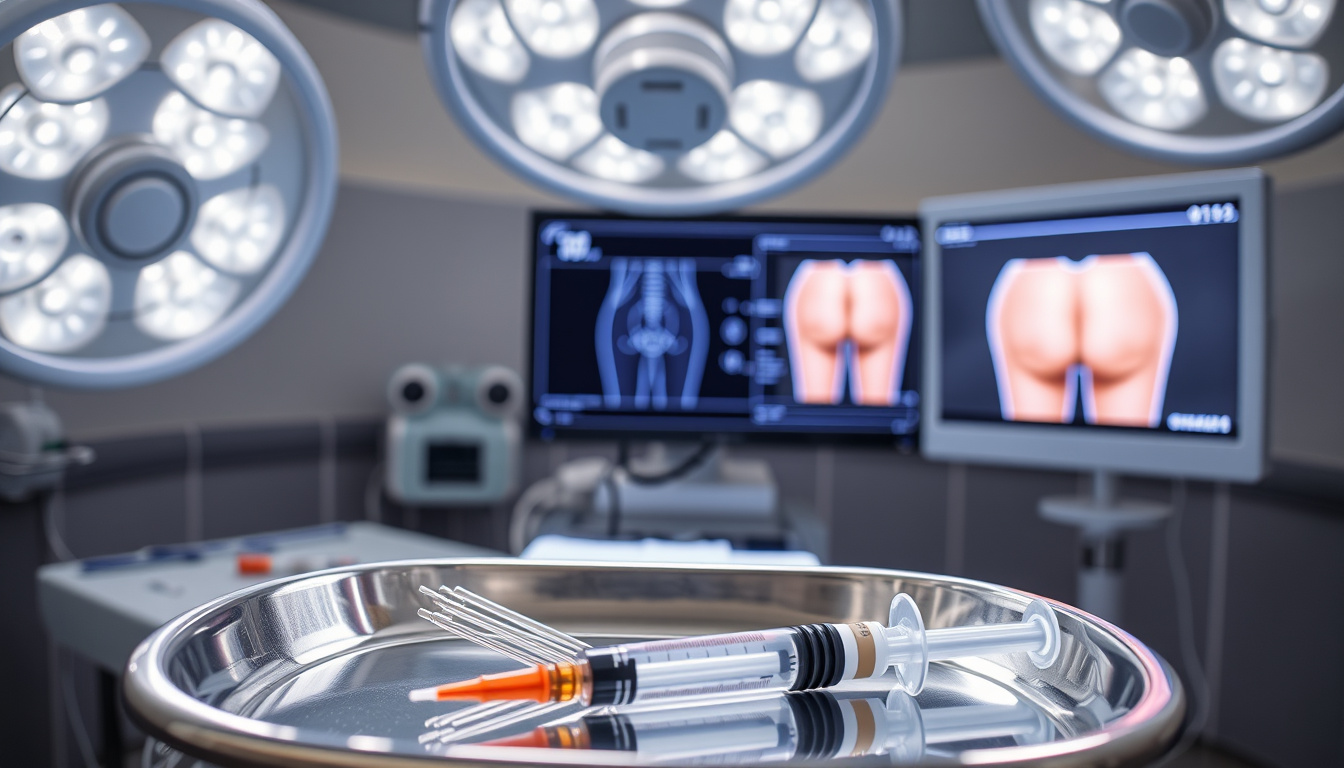
You’ve seen the dramatic before-and-after shots online, but the real story behind a Brazilian butt lift is more complicated than a single photo. It’s a procedure that combines liposuction with fat transfer, and while results can last years, it also carries serious risks—and a lesser-known post-operative smell that patients aren’t warned about, along with important considerations for safety and cost in Ireland.
Annual BBL procedures in the US (2022): approx. 30,000 ·
Average cost range (US): $4,000 – $15,000 ·
Typical recovery time: 2–4 weeks ·
Risk of fat embolism: <1% with modern techniques ·
Common result longevity: stable if weight maintained
Quick snapshot
- BBL uses liposuction and fat injection to the buttocks (The Aesthetic Society)
- Recovery requires avoiding direct pressure for 2–4 weeks (Cleveland Clinic)
- Fat embolism is a known risk if injected into muscle (The Aesthetic Society (risks))
- Exact cause of “BBL smell” – bacteria, wound healing, or hygiene? (ASPS (discussion))
- Long-term results beyond 10 years in large studies (Cleveland Clinic)
- Ireland-specific BBL cost data vs other buttock procedures (GoodRx)
- Ongoing safety research on subcutaneous-only injection (PubMed Central)
- Patient education about “BBL smell” may become standard (ASPS)
- Ireland-specific cost transparency likely to improve (GoodRx)
A summary table of key facts follows, covering procedure type through common side effects.
| Procedure type | Outpatient surgery |
|---|---|
| Anesthesia | General or IV sedation |
| Duration | 2–4 hours |
| Recovery time | 2–4 weeks before sitting normally |
| Results stability | Permanent with stable weight |
| Common side effects | Swelling, bruising, soreness, temporary odor |
A patient considering BBL faces a clear trade-off: the promise of semi‑permanent results versus a small but real risk of life‑threatening fat embolism. Post‑surgery odor adds a quality‑of‑life concern that is rarely discussed in marketing materials.
What is a Brazilian butt lift?
A Brazilian butt lift (BBL) is a cosmetic procedure that uses your own body fat to reshape and augment the buttocks. The American Society of Plastic Surgeons (ASPS) (professional medical society) notes that it has become one of the fastest‑growing cosmetic surgeries in the United States. But the name itself is a bit misleading: the technique was pioneered in Brazil in the 1980s, but the term “Brazilian butt lift” is largely a colloquial label.
How is a BBL performed?
- Surgeons use liposuction to remove fat from areas like the abdomen, thighs, or flanks.
- The harvested fat is purified and then injected into the buttocks to create volume and shape.
- The entire outpatient procedure takes about 2 to 4 hours under general or IV sedation, according to Cleveland Clinic (academic medical centre).
What is the difference between BBL and buttock implants?
- BBL uses autologous fat (your own fat), while implants involve a silicone or saline device placed under the gluteal muscle.
- Implants require a larger incision and carry different risks, such as implant displacement or rupture.
- BBL typically results in a more natural feel, but fat absorption of up to 40 percent can cause asymmetry, warns The Aesthetic Society (cosmetic surgery authority).
Why is it called a Brazilian butt lift?
The technique was refined by Brazilian plastic surgeons in the 1980s and gained popularity worldwide in the 2000s. Wikipedia (user‑maintained encyclopedia) notes that the term is now widely used in both medical and lay contexts, even though the procedure is not a “lift” in the traditional sense (it adds volume rather than tightening skin).
Bottom line: BBL is a fat‑transfer procedure, not a lift. It was popularised in Brazil but is now performed globally. Patients should understand that it involves two surgical steps – liposuction and injection – each with its own recovery demands.
The implication: any patient considering BBL should weigh the appeal of a natural-looking augmentation against the reality of two recovery processes unfolding simultaneously.
How long do Brazilian bum lifts last?
Once transferred fat cells survive, they behave like the rest of your body fat: they grow or shrink with weight changes. Cleveland Clinic (academic medical centre) describes results as semi‑permanent, noting they may last several years and even over a decade if weight remains stable.
What factors influence BBL longevity?
- Weight stability: the single biggest factor. A gain or loss of more than 10–15 pounds can alter the shape.
- Fat absorption: ASPS (medical society) reports that 20 to 40 percent of injected fat is absorbed during healing, which is why surgeons typically overfill slightly.
- Aging: skin elasticity declines over time, which may lead to sagging even if fat volume remains.
Can results last 10 years or more?
Yes – for the fat cells that survive the initial absorption phase, they can last a lifetime. However, large long‑term studies beyond 10 years are scarce. The available data, primarily from PubMed Central (peer‑reviewed literature), suggests that most patients maintain noticeable improvement for at least 5 years, with many retaining shape for a decade or more if they do not gain or lose significant weight.
The implication: BBL longevity is directly tied to lifestyle. A patient who plans to become pregnant or undergo drastic weight changes should expect the results to shift.
How much does a BBL cost in Ireland?
Ireland‑specific BBL price data is limited. Most published figures come from the United States, where GoodRx (consumer health platform) reports an average cost of just over $4,800 (€4,400), with a typical range of $4,000–$15,000 (€3,700–€14,000).
What is included in the price of a BBL in Ireland?
- GoodRx notes that the quoted price usually covers only the surgeon’s fee. Anaesthesia, operating‑room fees, pre‑ and post‑op visits, and any treatment for complications are often extra.
- In Ireland, clinics such as Auralia offer buttock implant surgery (starting around €5,000–€8,000), but they do not currently publish BBL‑specific pricing.
Are there financing options like Auralia’s monthly payments?
Some Irish clinics offer payment plans. Auralia, for example, provides monthly payment options for its buttock implant procedures. However, whether the same applies to BBL (where available) is not publicly listed. Patients should ask directly for a full breakdown of fees before signing consent forms.
What this means: without transparent Ireland‑specific data, you should budget at least €5,000–€7,000 for a BBL in Ireland, and confirm up front whether anaesthesia and aftercare are included.
What is BBL smell and why does it happen?
One of the most surprising side effects reported by BBL patients is a persistent, unpleasant odour from the surgical area – sometimes called “BBL smell” or “stinkbutt”. Patients have described it as a strong, musty, or even “death‑like” smell that can last weeks.
The phenomenon is rarely included in pre‑surgery discussions, yet it can cause significant distress and social embarrassment during recovery. A patient who expects only swelling and bruising may be unprepared for the psychological impact of a strong odour.
Is ‘BBL smell’ a real side effect?
Yes – it is widely discussed in online communities and mentioned in patient forums, though peer‑reviewed literature on the topic is sparse. ASPS (medical society) acknowledges the phenomenon, noting that healing incisions and drainage from the liposuction sites can produce temporary odour.
Does your bum smell after a BBL?
- The smell is not coming from the buttocks themselves but from the healing liposuction incisions – typically on the back, hips, or abdomen.
- These small incisions can accumulate serous fluid, bacteria, and dead tissue, creating an odour that may be noticeable through clothing.
- Proper wound care (regular showering, keeping incisions dry, wearing clean compression garments) can minimise it.
Why do I smell myself through my pants even after showering?
If the odour persists despite good hygiene, it could indicate an infection or a collection of fluid (seroma). A consultation with your surgeon is essential. GoodRx (consumer health platform) advises that any unusual discharge or worsening pain should be evaluated promptly.
What is a ‘stinkbutt’?
This informal term is used on patient forums to describe the strong post‑BBL odour. While not a medical diagnosis, it reflects a real and often under‑reported side effect. Surgeons and clinics increasingly acknowledge it in pre‑op education materials.
The trade‑off: the odour is temporary (typically 2–4 weeks) and resolves as incisions heal. But for some patients, it adds a layer of stress to an already uncomfortable recovery.
What this means for patients: Anyone considering a BBL should factor in the likelihood of temporary odour and plan for the psychological impact during the first weeks of recovery.
Who is not a good candidate for a BBL?
Not every person who wants a BBL is a safe candidate. The surgery requires enough donor fat to transfer, and certain medical conditions significantly raise the risk of complications.
What medical conditions disqualify someone from BBL?
- Insufficient body fat: ASPS (medical society) states that candidates must have enough fat in donor areas (abdomen, thighs, flanks) to harvest.
- Smoking: impairs wound healing and increases the risk of fat necrosis and infection.
- Obesity (BMI ≥30): raises anaesthesia risks and can lead to poor cosmetic outcomes.
- Uncontrolled diabetes or heart disease: general contraindications for elective surgery under general anaesthesia.
What are the risk factors for complications?
- Intramuscular injection: injecting fat into the gluteal muscle dramatically increases the risk of fat embolism. The Aesthetic Society (cosmetic surgery authority) recommends injecting only into the subcutaneous layer, above the muscle.
- Inadequate aftercare: failing to avoid direct sitting pressure for 2–4 weeks can cause fat cell death and asymmetry.
- Unqualified surgeon: BBL is one of the highest‑risk cosmetic procedures, and only board‑certified plastic surgeons with B‑specific training should perform it.
The pattern: the safest candidate is a non‑smoker with a normal BMI who has enough donor fat and is willing to follow strict post‑operative rules. Anyone who falls short on these criteria should expect a higher complication rate.
Upsides
- Uses your own tissue – no foreign body risk
- Natural look and feel when successful
- Results can last a decade or more
- Liposuction provides contouring to donor areas
Downsides
- Fat embolism risk (rare but often fatal)
- Up to 40% of fat may be absorbed
- Painful recovery – no sitting on buttocks for weeks
- Possible temporary odour (“BBL smell”)
- Expensive, and cost transparency is poor in Ireland
Timeline of BBL safety and popularity
Six milestones mark the journey from an experimental technique to a mainstream but contested procedure.
- 1980s: Early fat transfer techniques for buttocks developed in Brazil (Wikipedia).
- 2000s: Term “Brazilian butt lift” gains popularity.
- 2015: ASPS (medical society) issues warning about high risk of fat embolism with intramuscular injection.
- 2018: New safety guidelines recommend subcutaneous‑only injection; mortality rate drops to approximately 1 in 15,000 (PubMed Central).
- 2022: Over 30,000 BBLs performed annually in the US (ASPS stats).
- 2025: Ongoing debate about “BBL smell” and patient education.
The catch: improved technique has made the procedure safer, but the fat embolism risk, though reduced, remains potentially fatal. Mortality usually occurs on the operating table or within three hours after surgery, according to a 2018 review in PubMed Central (peer‑reviewed medical journal).
Confirmed facts vs. what remains unknown
Confirmed facts
- BBL involves liposuction and fat injection to the buttocks – Cleveland Clinic
- Fat embolism is a known risk, especially if injected into muscle – The Aesthetic Society
- Recovery requires avoiding direct pressure on buttocks – Cleveland Clinic
What remains unclear
- Exact cause of “BBL smell” – bacteria, wound healing, or hygiene? – ASPS (discussion)
- Long‑term results beyond 10 years in large studies – Cleveland Clinic
- Cost of BBL specifically in Ireland (vs other buttock procedures) – GoodRx
- Whether weight gain leads to dispersed fat in buttocks – no controlled studies
- Smell occurrence due to healing incisions and drainage – ASPS
“Inadvertent injection of fat intramuscularly can lead to a fat embolus and result in death.”
American Society of Plastic Surgeons (ASPS) – safety warning
“It improves the look of buttocks by removing fat from other areas and transferring it.”
Cleveland Clinic – procedure description
“In common parlance, lipoinjection into the buttocks is often called a Brazilian butt lift.”
Wikipedia – terminology note
The weight of the evidence: BBL offers durable results for the right candidate, but safety hinges on choosing a board‑certified surgeon who uses subcutaneous‑only injection and on following recovery rules strictly. The “BBL smell” issue, while not medically dangerous, deserves a place in pre‑surgery counselling.
theshinespa.com, delacruzplasticsurgery.com, agulloplasticsurgery.com
Frequently asked questions
Is a BBL safe?
With modern technique (subcutaneous injection only), the mortality rate is approximately 1 in 15,000, similar to a tummy tuck, according to ASPS (medical society). Fat embolism remains a rare but often fatal risk.
How much fat is typically transferred during a BBL?
Surgeons typically transfer 200 to 600 cc of purified fat per side, depending on the patient’s anatomy and desired outcome. The amount is limited by donor fat availability and tissue capacity.
Can I sit down after BBL?
Patients are advised to avoid sitting directly on the buttocks for 2–4 weeks. A special BBL pillow or lying on the stomach is recommended. Sitting too soon can flatten the result or cause fat cell death.
Does BBL leave scars?
Liposuction incisions are small and placed in natural skin folds; they fade over time but may remain visible. The injection sites are tiny and usually unnoticeable after healing. Cleveland Clinic (academic medical centre) notes that scars are minimal compared to implant surgery.
How do I find a qualified BBL surgeon in Ireland?
Look for a surgeon who is a member of the Irish Association of Plastic Surgeons (IAPS) or registered with the Medical Council of Ireland. Check that they have specific BBL training and use subcutaneous injection technique. Directly ask about their complication rates.
Will I need a second BBL procedure?
Many patients are satisfied with one surgery. However, if weight changes significantly or if the initial fat survival is low, a touch‑up procedure may be considered after 6–12 months. Cleveland Clinic says results are semi‑permanent, so additional procedures are not guaranteed.
Related reading
For more on health topics connected to surgery recovery:

Ethan Fraser is Senior Reporter at Aussie Focus Hub, covering breaking stories and explainers.