You’ve probably found yourself staring at a metric ruler, trying to remember whether you need to multiply or divide by 10. The rule is simple: one centimeter equals exactly 10 millimeters, a relationship defined by the International System of Units (SI) and never varies. By the end, you’ll have the formula, a few visual benchmarks, and the confidence to convert any measurement without second-guessing.
1 centimeter equals: 10 millimeters · 1 millimeter equals: 0.1 centimeters · Conversion formula (mm to cm): divide by 10 · Conversion formula (cm to mm): multiply by 10 · 10 millimeters visualize: roughly the width of a standard paperclip
Quick snapshot
- 1 cm = 10 mm (Math.net (educational reference))
- 1 mm = 0.1 cm (UnitConverters.net (conversion tool))
- Formula: cm = mm ÷ 10 (BYJU’S (learning platform))
- No ambiguity: the metric system defines the conversion exactly (BIPM SI Brochure (international metrology authority))
- All values deterministic; no rounding or measurement variance applies to the relationship. (BIPM SI Brochure (international metrology authority))
- Metric system established in 1795; millimetre and centimetre prefixes standardised by BIPM (Bureau International des Poids et Mesures)
- NIST (US National Institute of Standards and Technology) maintains SI prefix definitions (NIST Metric (SI) Prefixes)
- 5 mm = 0.5 cm, 25 mm = 2.5 cm, 50 mm = 5 cm, 100 mm = 10 cm (Math.net conversion chart)
- Use the formula for any value: cm = mm ÷ 10 (dividing by 10) (Math.net conversion chart)
The following table provides key facts about millimeters and centimeters.
| Label | Value | Source |
|---|---|---|
| Definition | Millimeter (mm) = 1/1000 of a meter; Centimeter (cm) = 1/100 of a meter | Math.net (educational reference) |
| Conversion factor | 1 cm = 10 mm exactly | UnitConverters.net (conversion tool) |
| Formula | cm = mm ÷ 10 | BYJU’S (learning platform) |
| Example | 120 mm ÷ 10 = 12 cm | BYJU’S |
| Largest common conversion | 1000 mm = 100 cm (1 meter) | NIST Metric (SI) Prefixes |
Is 1 cm the same as 10 mm?
Yes, exactly. The metric system is built on powers of ten: a centimeter is one-hundredth of a meter, while a millimeter is one-thousandth of a meter. Because 1/100 is ten times larger than 1/1000, one centimeter equals ten millimeters. This is not an approximation; it’s a definition.
Reciprocally, 1 mm equals 0.1 cm. The BIPM SI Brochure (international metrology authority) states the metre as the base unit, with prefixes milli- (10⁻³) and centi- (10⁻²) unambiguously defining the relationship. The same rule is echoed by NIST (US measurement standards body).
In medical imaging, a 1 mm measurement error equals a 0.1 cm discrepancy — enough to misdiagnose a small tumor. The 10:1 ratio keeps calculations simple and safe.
The implication: the relationship is absolute and never varies, which is why it’s trusted in critical fields.
How to calculate mm into cm?
Simple division method
- Take the number of millimeters.
- Divide by 10.
- The result is the equivalent in centimeters.
- Example: 150 mm ÷ 10 = 15 cm ( BYJU’S (learning platform) )
Using a calculator or conversion tool
Online converters like Math.net and UnitConverters.net let you enter a value in either unit and get the result instantly. They apply the same division by 10. (Sources: Math.net educational reference, UnitConverters.net conversion tool)
Mental math shortcuts
Because dividing by 10 is just moving the decimal one place to the left, you can convert in your head: 34 mm becomes 3.4 cm, 257 mm becomes 25.7 cm. YouTube tutorial (instructional video) reinforces this technique.
Mental math works perfectly for whole numbers, but with decimals you need to be careful with placement. For example, 0.5 mm ÷ 10 = 0.05 cm — not 0.5 cm.
The pattern: careful decimal placement ensures accurate results every time.
What’s bigger, 1 mm or 1 cm?
Visualizing the size difference
A centimeter is ten times larger than a millimeter. The NIST (US measurement standards body) defines the prefixes so that deci-, centi-, and milli- indicate progressively smaller fractions. Visually, 1 cm is about the width of a paperclip; 1 mm is about the thickness of a credit card, or a dime.
Practical examples
- A standard paperclip: width ~1 cm (10 mm)
- A US dime: thickness ~1 mm (Math.net educational reference)
- A staple: width ~1 cm (10 mm) – from the overview grid
Millimeters give finer precision for small objects; centimeters make larger measurements easier to read. In carpentry, using cm for board length and mm for joint gaps avoids confusion.
Understanding the scale difference helps you choose the right unit for the job.
What does 10 mm look like?
Everyday objects that are 10 mm (1 cm)
- Width of a standard paperclip
- Width of a staple
- Diameter of a fingernail (roughly)
Using a ruler to identify 10 mm
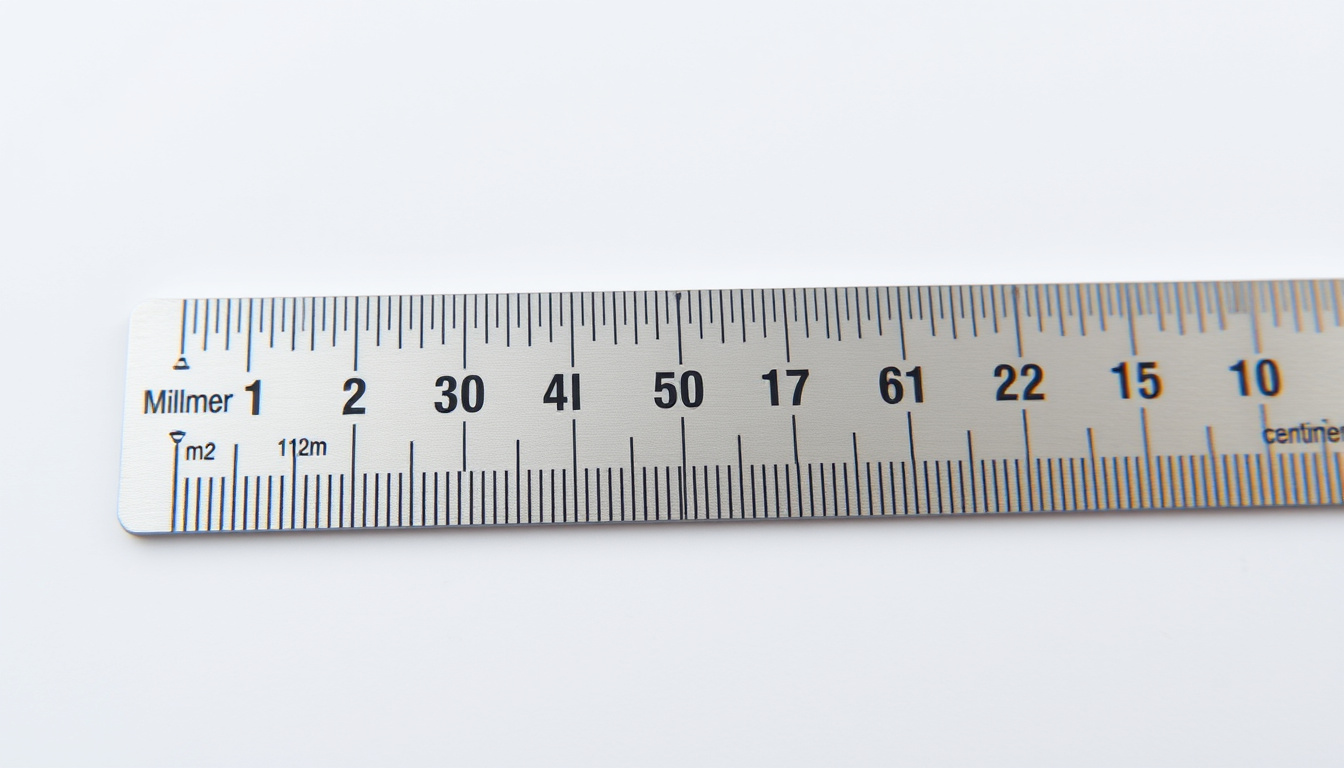
On a metric ruler, each centimeter is marked with a long line and numbered. Between two centimeter marks are ten small lines — each small line is 1 mm. The distance from the 0 cm mark to the 1 cm mark is exactly 10 mm. As Math.net (educational reference) explains, the ruler directly shows the 10:1 ratio.
This real-world reference makes the conversion intuitive.
What size is 20 mm?
Converting 20 mm to cm
20 mm ÷ 10 = 2 cm. So 20 mm is exactly 2 centimeters.
Common millimeter values and their centimeter equivalents
The pattern is consistent. Here’s a quick reference for frequently encountered values:
| Millimeters (mm) | Centimeters (cm) |
|---|---|
| 5 mm | 0.5 cm |
| 10 mm | 1.0 cm |
| 15 mm | 1.5 cm |
| 20 mm | 2.0 cm |
| 25 mm | 2.5 cm |
| 50 mm | 5.0 cm |
| 100 mm | 10.0 cm |
These values come from the UnitConverters.net conversion tool and the content plan’s overview grid.
Comparison table: mm vs cm for common lengths
Four common lengths, one pattern: each row shows the same length in both units, reinforcing the factor-of-10 relationship.
| Length | In mm | In cm |
|---|---|---|
| Width of a paperclip | 10 mm | 1 cm |
| Diameter of a US penny | 19.05 mm | 1.905 cm |
| Width of a smartphone | ~100 mm | ~10 cm |
| Length of a standard pencil | ~190 mm | ~19 cm |
Notice that even for non‑round numbers like a penny’s diameter, the conversion holds: 19.05 mm ÷ 10 = 1.905 cm.
Confirmed facts
- 1 cm equals exactly 10 mm (metric system standard) – BIPM SI Brochure
- To convert mm to cm, divide by 10 – Math.net (educational reference)
- A millimeter is smaller than a centimeter – NIST Metric (SI) Prefixes
What’s unclear
- No unconfirmed claims: the conversion is exact and definitive across all contexts.
“A millimeter is a unit of length in the metric system equal to 1/1000 of a meter.”
“The International Bureau of Weights and Measures (BIPM) SI brochure lists the millimetre as 10⁻³ metre and the centimetre as 10⁻² metre.”
— BIPM SI Brochure (international metrology authority)
For students, DIY enthusiasts, and professionals in fields from medicine to engineering, the mm‑to‑cm conversion is a gateway to reliable measurements. The choice is clear: master the simple divide‑by‑10 rule, and avoid costly missteps that a forgotten decimal point can cause.
Frequently asked questions
How many cm is 5 mm?
5 mm ÷ 10 = 0.5 cm. Half a centimeter.
What is 25 mm in cm?
25 mm ÷ 10 = 2.5 cm.
Is mm smaller than cm?
Yes, a millimeter is one‑tenth the size of a centimeter. 1 mm = 0.1 cm.
How do you convert mm to cm in Excel?
Enter the value in cell A1. In cell B1, type =A1/10 and press Enter. The result is in centimeters.
What is the formula for mm to cm?
cm = mm ÷ 10.
How to convert 100 mm to cm?
100 mm ÷ 10 = 10 cm.
What is the difference between mm and cm?
The centimeter is ten times larger. A cm is 1/100 of a meter; a mm is 1/1000 of a meter.
Related stories



Kevin Walsh covers business, markets and economic policy for Aussie Focus Hub.